Quick answer for Tarapur food businesses
India's 2026 FSSAI reforms make the licensing path simpler for many small food businesses, but they do not remove food-safety responsibility. From 1 April 2026, the turnover ceiling for basic FSSAI registration is up to Rs 1.5 crore. A State licence generally covers annual turnover above Rs 1.5 crore and up to Rs 50 crore, while a Central licence generally applies above Rs 50 crore. Licences and registrations now have perpetual validity unless suspended, cancelled or surrendered. A June amendment also limits specified FIFO/FEFO record-keeping duties to manufacturing businesses, exempting non-manufacturing retailers from those particular records.
For a grocery, dairy, sweets, bakery, snacks, tea, cafe or packaged-food shop in Tarapur, confirm the category on FoSCoS, design for hygiene, document the duties that still apply, and do not confuse reduced paperwork with reduced safety. This guide is informational; verify a specific activity through FoSCoS and the competent authority.
What changed in the 2026 licensing framework
FSSAI's official reform FAQ explains three important changes. First, the turnover thresholds rose substantially. Basic registration now covers food businesses with annual turnover up to Rs 1.5 crore. State licensing generally applies above Rs 1.5 crore and up to Rs 50 crore, and Central licensing generally applies above Rs 50 crore. These revised thresholds took effect on 1 April 2026 for new applications submitted on or after that date.
Second, registrations and licences have perpetual validity unless suspended, cancelled or surrendered. The annual renewal cycle has therefore been removed. Existing businesses receive a migration path through FoSCoS rather than discarding their current record.
Third, oversight is becoming risk-based. FSSAI's March announcement says inspections will focus more on high-risk food businesses. Lower risk never excuses poor hygiene; regulatory attention is simply intended to follow risk more intelligently.
What the June FIFO and FEFO amendment means
FIFO means first in, first out; FEFO means first expiry, first out. Both are stock-rotation methods. The Ministry of Health and Family Welfare said on 26 June that amended record-keeping and FIFO/FEFO requirements now apply only to manufacturing food businesses. Non-manufacturing food businesses, including retailers, are exempt from those specific requirements.
The distinction matters. A Tarapur retailer that only buys and sells sealed products is different from a unit that manufactures or processes food. A bakery producing items on site, a sweets unit preparing products, or another processing operation may fall on the manufacturing side. A grocery or packaged-snack counter may be a non-manufacturing retailer. Mixed activities must be checked carefully in FoSCoS.
The exemption is about specified records, not permission to sell expired, damaged or improperly stored food. Retailers should still check dates, separate damaged packs, maintain clean storage, follow temperature requirements, and meet applicable Schedule 4 duties. Prudent rotation protects customers and reduces dead inventory even when a register is not mandatory.
Do not choose a licence using turnover alone
The revised turnover bands are an important starting point, not a universal shortcut. FSSAI eligibility can also depend on the kind of food activity, installed capacity, product category, number of operating locations, import or export activity, and whether the business manufactures, stores, transports, distributes or only retails food. A cloud kitchen, bakery, dairy operation, wholesaler and neighbourhood grocery may therefore reach different results even with similar sales.
Before paying a consultant or ordering signage, use FoSCoS eligibility guidance. Disclose preparation, processing, repacking, relabelling and controlled-temperature storage. Keep the selected kind of business and supporting documents aligned with the shop layout and daily operation.
Food-shop categories relevant to Tarapur
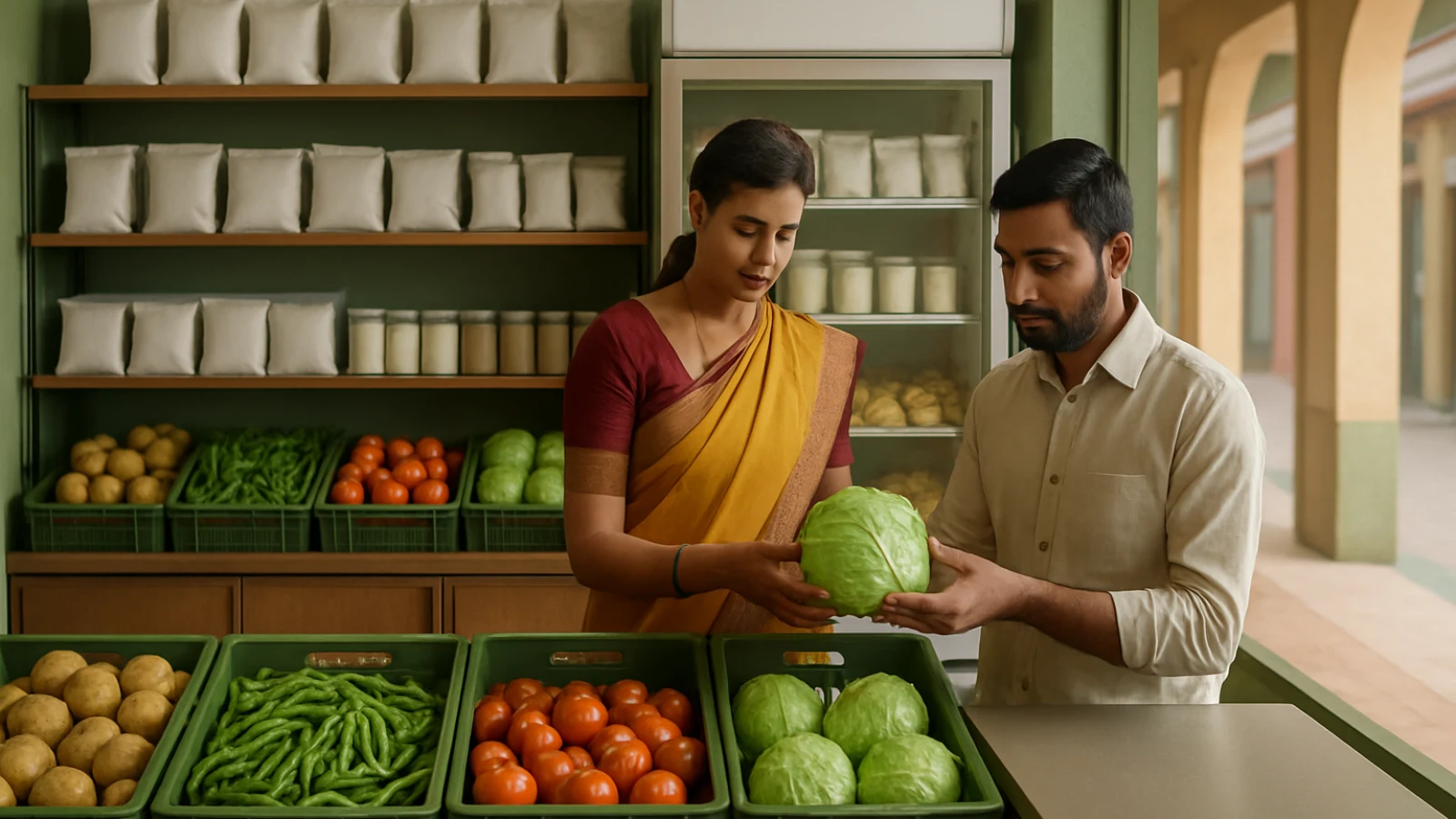
- Grocery and daily-needs retail: Plan dry shelves, expiry checks, pest prevention, separated cleaning supplies and a receiving area that does not block customers.
- Dairy and frozen products: Verify reliable refrigeration, temperature monitoring, backup planning and enough ventilation around equipment.
- Bakery, sweets and snacks: Clarify whether products are manufactured on site. Separate raw material, preparation, cooling, display and waste movement.
- Tea, cafe and fast food: Plan potable water, handwashing, washable surfaces, safe LPG or electrical equipment, drainage and a queue that does not enter the preparation zone.
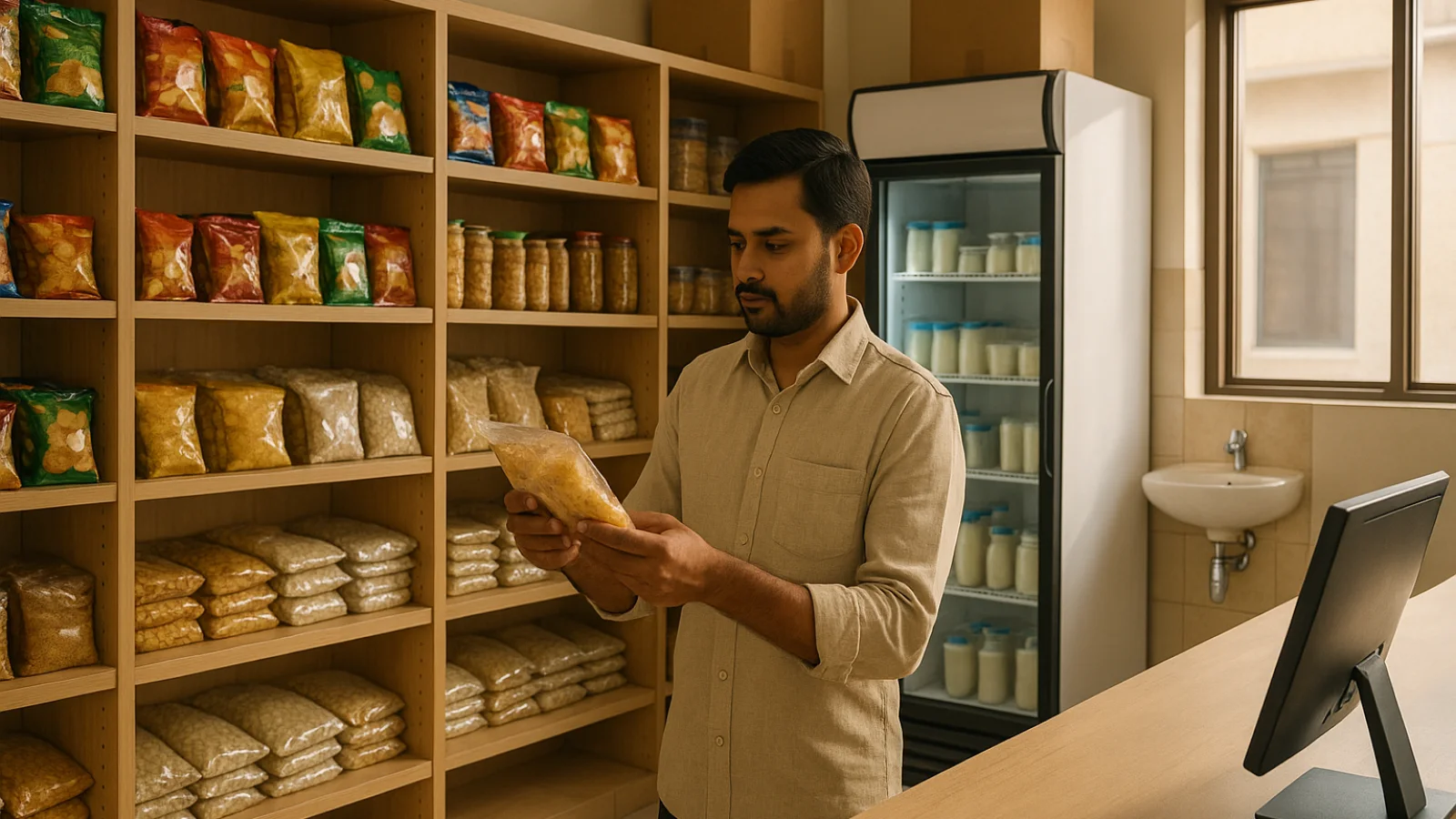
- Packaged-food counter: Keep supplier invoices, inspect seals, rotate dated stock and avoid direct heat, dampness or sunlight.
- Food distribution or wholesale: Check whether storage, transport, multiple premises or turnover changes the licence requirement.
A practical Balram Complex site-visit checklist
Assess a unit against the food process, not only its frontage. During a Balram Complex site visit, sketch stock, staff, customer and waste movement. A compact shop can work efficiently when clean and dirty activities do not cross and shelves preserve circulation.
- Identify a dry receiving point and raised storage for cartons and ingredients.
- Check where a hand-wash point, potable-water connection and drainage would be placed if the activity needs them.
- Measure refrigeration and cooking equipment, including safe ventilation and service clearance.
- Keep billing and customer queues away from open-food preparation.
- Plan washable work surfaces, covered waste bins and a cleaning-material zone separated from food.
- Confirm electrical load and backup needs before buying refrigerators, freezers, ovens or display warmers.
- Reserve visible but controlled space for the FSSAI number, required notices and customer information.
A 30-day setup workflow
- Days 1-3: Define whether the business will retail, manufacture, prepare, repack, store, distribute or combine activities.
- Days 4-7: Use FoSCoS eligibility guidance and prepare identity, address, premises and business documents relevant to the selected category.
- Days 8-12: Inspect the shop with equipment dimensions, water, drainage, power, storage, ventilation and customer flow in hand.
- Days 13-18: Finalize a hygiene-led layout and supplier plan. Decide how expiry checks, cleaning, pest prevention, temperature control and complaint handling will work.
- Days 19-24: Submit the correct application or modification and retain the acknowledgement. Do not state that approval is guaranteed.
- Days 25-30: Train staff, test cleaning and temperature routines, organize invoices and open only after all applicable approvals are in place.
Frequently asked questions
Is FSSAI registration enough for every shop below Rs 1.5 crore?
Not automatically. The revised turnover ceiling is a general threshold, but the kind of activity, product, capacity, premises and other eligibility conditions can affect the result. Use the FoSCoS eligibility tool and disclose all food activities before selecting registration or a licence.
Does perpetual validity mean the shop can stop complying?
No. Perpetual validity removes periodic renewal, not the operating duties. The registration or licence can still be suspended or cancelled, and the business must continue to meet applicable hygiene, safety, labelling, display, inspection and record obligations.
Do retailers no longer need to check expiry dates?
Retailers remain responsible for safe food. The June amendment exempts non-manufacturing businesses from specified FIFO/FEFO record-keeping requirements; it does not authorize the sale of expired or unsafe products. Date checks and sensible rotation remain essential shop practice.
Is an on-site bakery or sweets counter a retailer?
It may include manufacturing or processing because food is produced on the premises. The correct FoSCoS category depends on the exact operation. List preparation, baking, cooking, packing and storage activities rather than describing the unit only as a retail counter.
What should a shop seeker verify before leasing?
Verify the planned activity, licence eligibility, water and drainage needs, electrical load, ventilation, refrigeration space, clean storage, waste handling and customer flow. Also confirm current shop availability and commercial terms directly with Balram Complex management; this article does not quote rent or promise approval.
Bottom line
FSSAI's 2026 reforms reduce renewal work and simplify the turnover framework, while the June amendment removes specified stock-rotation records for non-manufacturing retailers. The safest response for Tarapur entrepreneurs is not to treat compliance as finished. It is to classify the activity correctly, build hygiene into the shop, keep practical stock controls, and verify the application through FoSCoS. That approach protects customers and makes a Balram Complex site visit more useful because the unit can be compared against real operational needs.
Official sources
- FSSAI FAQ on licensing and registration reforms, 27 March 2026
- Ministry of Health and Family Welfare release on FSSAI reforms, 31 March 2026
- Ministry release on the FIFO/FEFO amendment, 26 June 2026
- Official Hindi ministry release on the FIFO/FEFO amendment
- FSSAI licensing and registration amendments page
- FSSAI Food Safety Compliance System (FoSCoS)
- Munger district official Tarapur office listing
Plan the premises: View Balram Complex shops and book a site visit to compare storage, utilities, customer flow and equipment space for your proposed food business.