Quick answer for Tarapur shop planners
Bharat Tex 2026 is not a local demand survey for Tarapur, and it does not tell a shop owner exactly which colour, size or price will sell. Its value is different: the event brings the textile value chain, product categories, sourcing tools, sustainability discussions and buyer practices into one current national signal. A Tarapur garment, tailoring, home-linen or craft-led retailer can use that signal to improve product selection, supplier questions, inventory records, visual presentation and customer follow-up before investing in a shop.
The practical lesson is to build a disciplined assortment rather than a crowded store. Start with repeat needs, add a smaller seasonal range, test new designs in controlled quantities, and record customer requests. A compact shop at Balram Complex should make products easy to compare while preserving storage and working space.
What is happening at Bharat Tex 2026
The Ministry of Textiles reported that Bharat Tex 2026 opened at Bharat Mandapam, New Delhi, on July 14 and runs through July 17. The official inauguration release says the event has more than 6,000 buyers from over 130 countries, more than 1.3 lakh trade visitors, over 1.6 million square feet of exhibition space and more than 20,000 textile products. It covers the integrated textile and apparel value chain and focuses on trade, sourcing, innovation, sustainability and collaboration.
The same release lists Bihar among eight sponsor states and includes a Bihar Investor Connect session. That is a state-level industry signal, not evidence of immediate Tarapur retail demand. Treat it as a prompt to study products and suppliers, not a reason to overstock.
Two related initiatives add context. Indie Haat 2026 is showcasing handloom and handicraft products and artisan-buyer engagement. The Bharat Tex app supports exhibitor discovery, category search, meetings, lead capture and follow-up.
Seven retail lessons for a Tarapur textile business
- Define the customer job before choosing stock. A garment shop may serve students, working adults, families, festive occasions or everyday needs. A home-textile counter may focus on bedsheets, towels, curtains or kitchen linen. Choose one primary job and two supporting categories.
- Use a three-part assortment. Keep a dependable core range, limited seasonal stock and a small test range. Cover repeat sizes, colours and price bands first. Testing lets the owner learn without locking too much cash into uncertain designs.
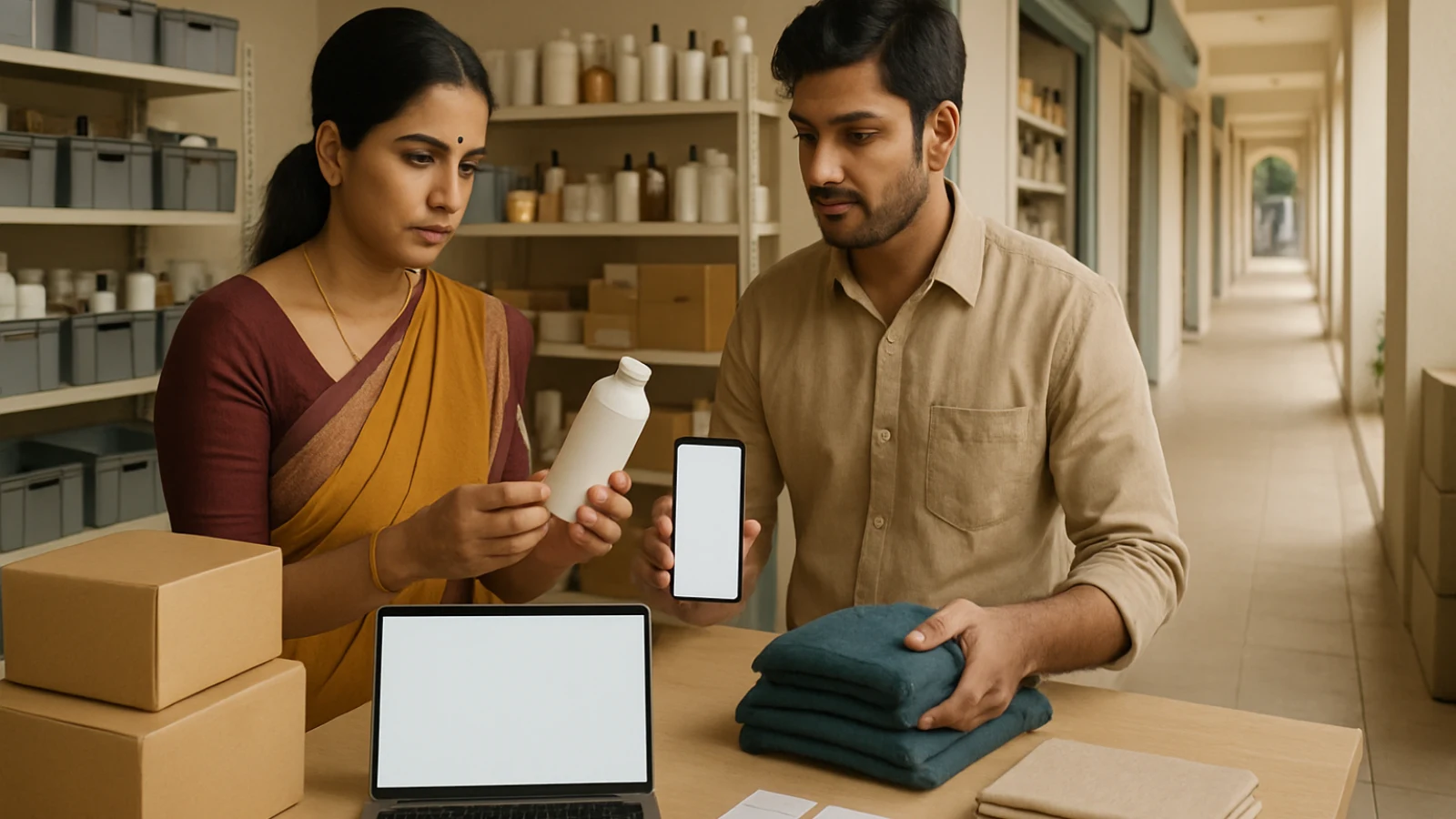
- Ask suppliers better questions. Record fabric composition, size consistency, colours, minimum order, replacement policy, lead time, invoice terms and repeat availability. A low price is not useful when sizing varies or defects cannot be resolved.
- Make product information visible. Customers compare faster when price, size, fabric, care and variants are clear. This reduces repeated questions and helps staff give consistent answers. Avoid quality claims that cannot be explained.
- Turn the phone into a working catalogue. Maintain clean photographs, item codes, sizes, prices and availability. A Tarapur retailer can adapt the event's structured discovery and lead-capture principle through disciplined records and prompt replies.
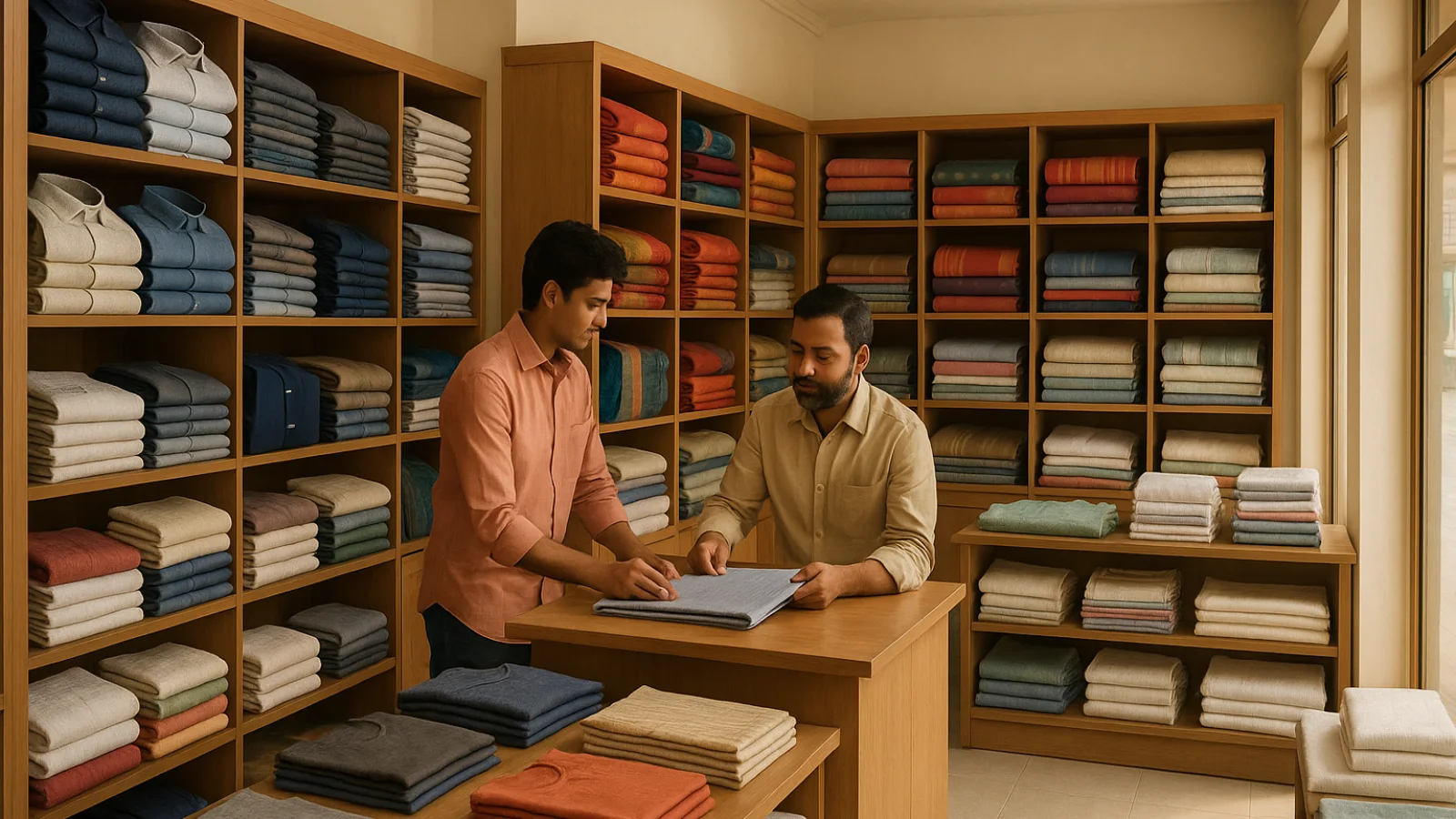
- Merchandise by use, not only by supplier. Group office wear, daily wear, festive options, children's products or home-linen sets clearly. Keep strong products at eye level, preserve the route to the counter, and avoid dense walls.
- Measure sell-through before reordering. Track receipts, sales, returns, damage and requests by size or category. Reorder from evidence; a weekly notebook or spreadsheet is better than memory.
Which business formats can use this trend?
- Garments and family apparel: A focused mix of everyday wear, selected occasion wear and reliable sizing can be easier to manage than attempting every category from day one.
- Tailoring and alteration: A service counter can combine measurements, samples, fabric coordination, appointment records and pickup communication without carrying a full retail inventory.
- Home textiles: Bedsheets, towels, curtains, cushion covers and practical linen can be displayed through samples while backup stock stays organised by size and pattern.
- Handloom and craft-led gifts: Product origin, material, maker story and care instructions matter. The owner should verify claims and preserve supplier documentation rather than using unsupported labels.
- Hybrid catalogue shop: A smaller display range can be supported by supplier catalogues and scheduled ordering, provided delivery timing and customer expectations are stated clearly.
How to plan a compact textile shop
Begin with customer movement. The entrance should reveal the main category within a few seconds. A display wall can present hero products, while lower or closed storage holds repeat stock. Keep a clear counter for billing, packaging and phone enquiries. If the concept needs trials or measurements, plan privacy and safe movement before adding shelves. Lighting should show colour accurately without creating excessive heat.
Separate display from reserve inventory. Label shelves by category, size and price band. Keep fast-moving items close and seasonal products higher or deeper. Protect fabric and packaging from moisture, dust and floor contact. The aim is to make the right product easy to find.
Before signing a lease, estimate the space needed for display, storage, counter work, customer waiting, trials or measurements, packaging and staff movement. Then compare that plan with available units rather than choosing only by frontage. Explore the available shops at Balram Complex and use a site visit to test the layout with actual shelf and counter dimensions.
A 30-day launch checklist
- Write the primary customer, core category and planned price bands on one page.
- Create a supplier comparison sheet covering quality, minimum order, lead time, invoice and replacement terms.
- Prepare an opening assortment with core, seasonal and test quantities clearly separated.
- Assign item codes and record cost, selling price, size, colour and stock count.
- Mock the entrance, display wall, counter, storage and customer path before installing permanent fixtures.
- Photograph the opening range consistently and prepare concise phone or messaging replies.
- Review enquiries and sales weekly, then reorder only the categories showing evidence of movement.
Questions to ask during a Balram Complex site visit
Can the main products be understood from the entrance? Where will reserve stock stay dry and organised? Is there enough depth for a counter and customer circulation? Can lighting show colours accurately? Where will measurements, trials, packaging or order pickup happen? Is phone connectivity suitable for digital catalogues and payments? Which unit best fits walk-in retail, appointment-led tailoring or a hybrid catalogue model?
Bring approximate shelf, counter and storage dimensions to the visit. A layout measured against the actual unit is more reliable than deciding from photographs alone.
Frequently asked questions
What is Bharat Tex 2026?
It is a Ministry of Textiles-supported global textile event being held in New Delhi from July 14 to 17, 2026. Official information describes coverage across fibres, yarns, fabrics, apparel, home textiles, technical textiles, handlooms, handicrafts, sustainability and manufacturing technology.
Does Bharat Tex prove that garment demand is rising in Tarapur?
No. The event is a national and international industry signal, not a Tarapur sales or footfall study. Local decisions should use customer conversations, competing offers, supplier terms, available capital and small test orders before larger commitments.
What should a first-time garment retailer stock?
Start with a narrow core assortment tied to a defined customer, then add limited seasonal and test ranges. Record size and price requests, sell-through and returns. Expand categories only after the shop has evidence, not because a trade event displays a large range.
Can a small shop combine retail and tailoring?
Yes, if the layout protects both functions. Retail display, measurement privacy, sewing or alteration workflow, storage, pickup and customer waiting must not obstruct one another. Confirm the required electrical load, equipment placement and operating process during the site visit.
What information should be collected from a textile supplier?
Keep the supplier name, invoice details, item specifications, fabric composition, size chart, minimum order, lead time, repeat availability, payment terms and replacement policy. Retain photographs and item codes so customer enquiries and reorders can be matched accurately.
Bottom line
Bharat Tex 2026 shows the scale and diversity of India's textile ecosystem, but the most useful Tarapur takeaway is discipline: define the customer, structure the assortment, document suppliers, present products clearly, follow up digitally and measure what sells. A site visit at Balram Complex can then test whether the shop supports that operating plan instead of forcing the business into an unsuitable layout.
Official sources used
- PIB: Bharat Tex 2026 inauguration and participation, July 14, 2026
- PIB Hindi: Official Bharat Tex 2026 inauguration release
- PIB: Indie Haat 2026 handloom and handicraft showcase
- PIB: Bharat Tex app for exhibitor discovery and lead follow-up
- Munger district administration: official Tarapur office listing
Plan your visit: Review Balram Complex shop options, then use the Book Site Visit popup to discuss a garment, tailoring, home-textile or catalogue-led business layout in Tarapur.