What the July 2026 MSME Pulse actually says
SIDBI and TransUnion CIBIL's July 2026 MSME Pulse gives Tarapur shop planners a useful national signal: small-ticket formal credit is closely connected with retail trade, but a loan should still be built around a clear business purpose and realistic repayment capacity. The report is based on commercial-credit data across India. It does not publish a Tarapur approval rate, local interest rate or guaranteed loan amount, so its figures should be used as planning context rather than as a promise.
As of March 2026, the report counted 29 lakh enterprises with aggregate commercial-credit exposure between ₹2 lakh and ₹10 lakh. Retail trade represented 56% of balances in that segment. The report also found that 71% of these borrowers were in CMR 1-7 risk bands and 38% had a cash-credit product. On its trade-sector page, retail trade made up 79% of live trade entities, compared with 21% for wholesale trade, and ₹2-10 lakh was the dominant exposure segment for 47% of retail-trade entities.
Public-sector banks held the largest balance share in the ₹2-10 lakh enterprise segment, and cash credit was the largest product within their balances. The report also highlighted a wider access gap: only 41% of registered MSMEs had accessed formal credit, while the share of new-to-credit entities in originations declined from 52% in FY2023 to 42% in FY2026. For a first-time Tarapur entrepreneur, the practical message is not "borrow more." It is "prepare a clearer file and match the facility to the business cycle."
What this means for a Tarapur shop plan
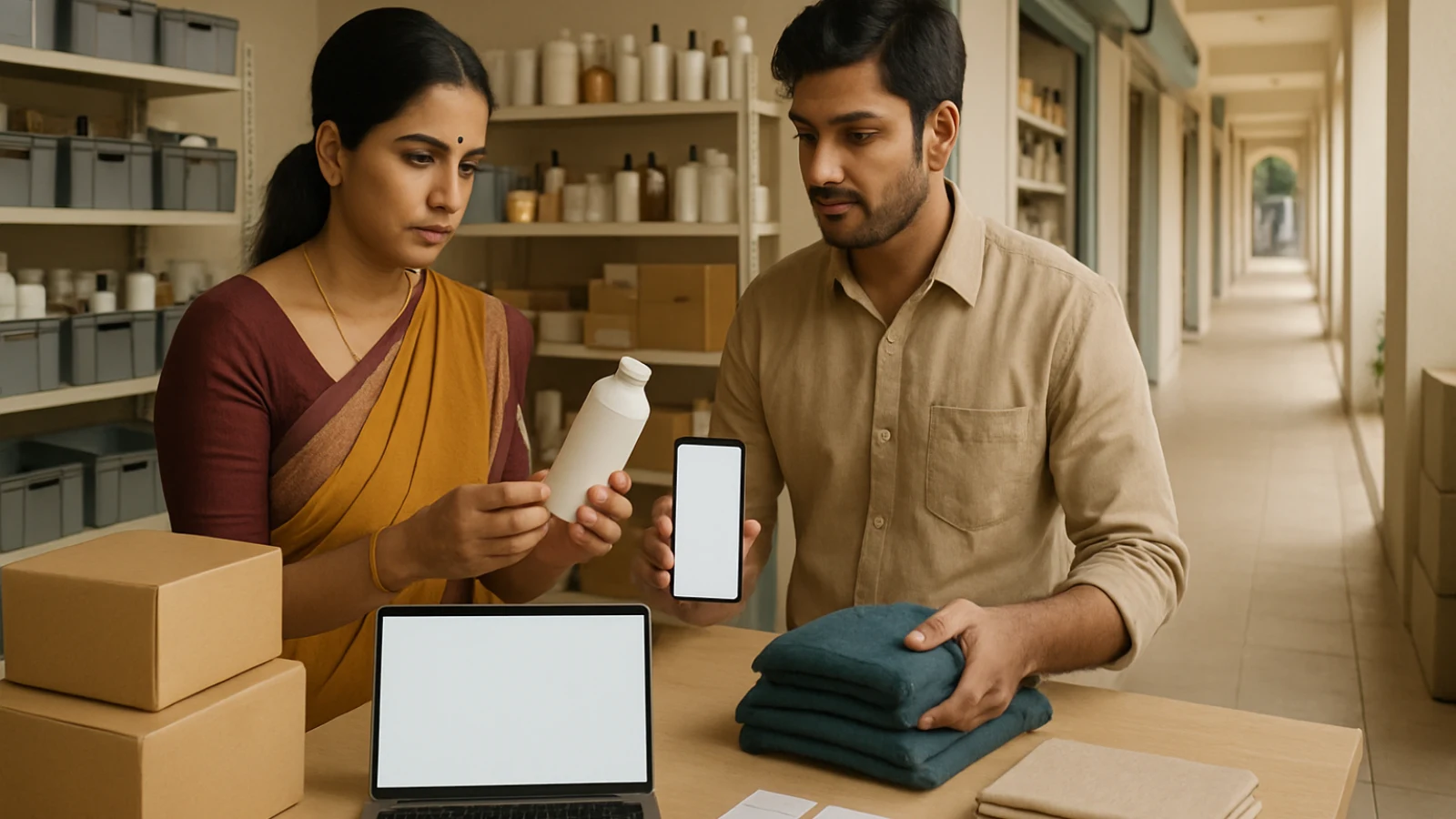
A small retail or service business often needs money at different times for different reasons. Mixing every requirement into one rounded loan request can make the plan difficult to understand and harder to manage after opening. Before approaching a lender, divide the requirement into three buckets:
- Premises and fit-out: security deposit, basic interiors, counters, shelving, lighting, signage, wiring, internet setup and any category-specific work.
- Business assets: refrigerator, display equipment, computer, printer, diagnostic equipment, furniture, tools, billing device or other durable items.
- Working capital: opening stock, supplier payments, wages, utility bills, packaging, transport and a realistic buffer for the first operating cycle.
This separation helps a lender understand where the money will go, and it helps the owner avoid using stock finance for permanent interiors or using a long-term asset loan to cover recurring losses. Keep personal household spending outside the business estimate wherever possible.
Build a lender-ready file before applying
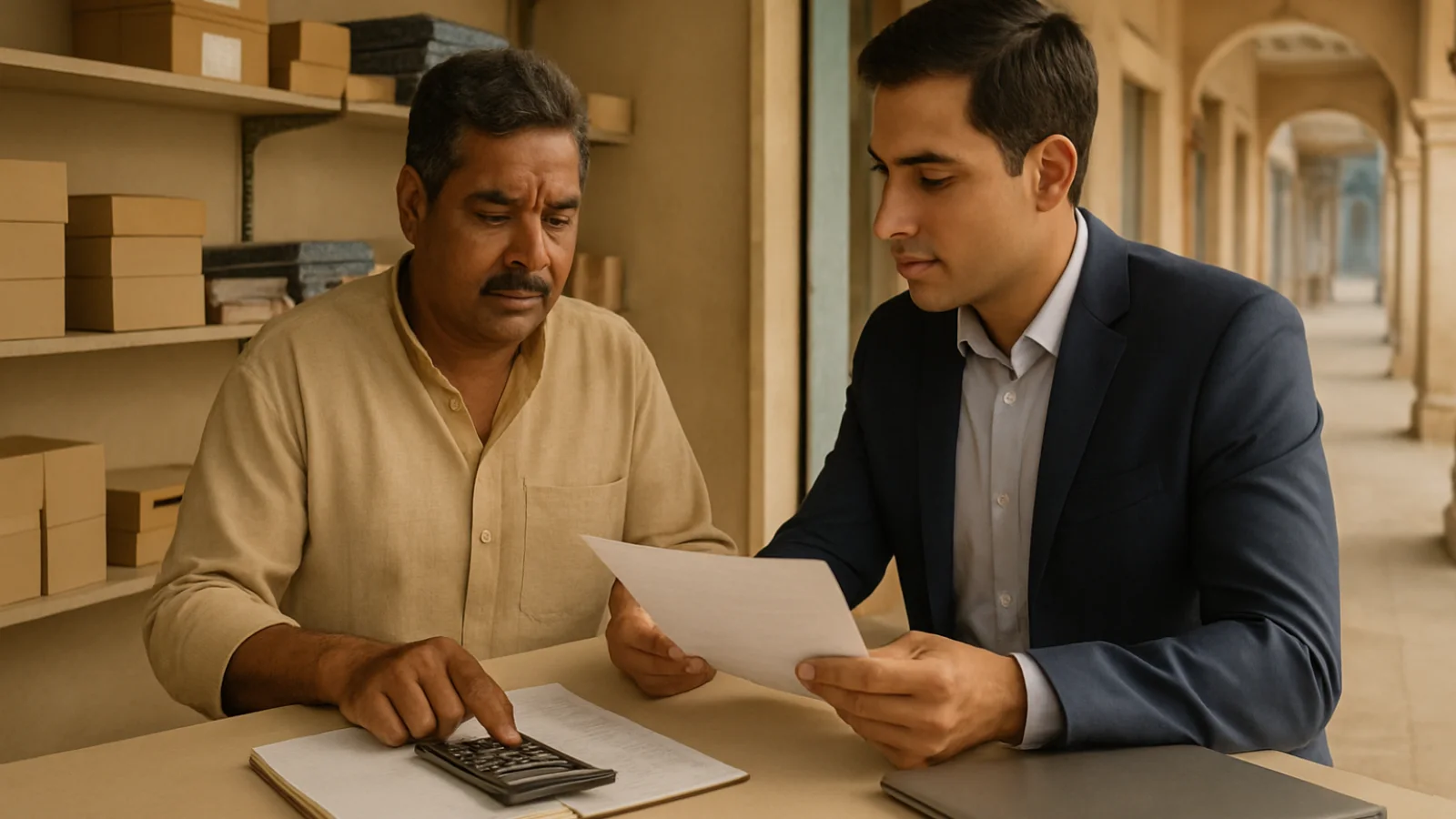
A lender may ask for different documents depending on the borrower, product and institution. A practical preparation folder can still be assembled in advance. Keep identity and address records consistent; prepare PAN, bank-account details and GST information where applicable; collect supplier or equipment quotations; and write a one-page explanation of the business, target customer, proposed shop, expected opening date and owner's experience.
Udyam registration is an important official starting point for eligible enterprises. The Government's Udyam portal states that registration is free, paperless and based on self-declaration, and that no renewal is required. Use only the official portal and do not pay an unauthorised intermediary for a process the Government describes as free. Udyam registration by itself does not guarantee finance, but it creates a consistent enterprise identity that can support formal business processes.
Also prepare recent bank statements, details of existing loans or cards, evidence of the owner's contribution, and a simple month-by-month cash-flow estimate. If the business is new, explain the assumptions behind sales, gross margin, stock rotation and fixed costs instead of presenting one optimistic annual number.
Choose the facility according to the use
The MSME Pulse shows why cash credit is important in the small-ticket segment, but cash credit and a term loan solve different problems. A term loan is generally easier to map to equipment or fit-out that will be used for several years. A working-capital or cash-credit facility is designed around short operating cycles such as buying inventory, selling it and replenishing it. The correct product depends on lender assessment, business records and the actual use of funds.
For a pharmacy, grocery, garments, footwear, mobile-accessory or agri-input outlet, the stock cycle may be central. For a clinic, coaching centre, cyber service, repair counter or professional office, equipment and the time required to build monthly customer volume may matter more. A food or beverage counter must also budget for equipment, packaging, perishability, hygiene and daily cash discipline. The loan request should reflect the category rather than copying a generic business-plan figure.
Use the RBI Key Facts Statement before deciding
The Reserve Bank of India says regulated lenders must provide a Key Facts Statement for retail and MSME term loans in a simple format, including the all-in cost. Read that statement rather than comparing only the headline interest rate. Ask the lender to explain the annual percentage rate, processing and other charges, insurance if any, repayment schedule, security or guarantee requirement, penal charges, prepayment conditions and grievance contact.
Never treat a fast digital approval screen as a substitute for checking the lender and the full cost. Keep copies of the application, sanction terms and repayment schedule. Do not share OTPs or account credentials with an agent, and do not assume that a credit-guarantee programme removes the borrower's repayment obligation.
Connect the finance file to the actual shop
A shop budget becomes more credible when the premises assumptions are verified. During a Balram Complex site visit, ask management to confirm the current rent or commercial consideration, price period, deposit, maintenance responsibility, power arrangement, water or washroom access where relevant, fit-out condition, signage possibility, possession timeline and any written lease conditions. Availability and commercial terms can change, so confirm them directly before using them in a loan file.
Measure the unit against the operating model. Where will the counter, customer queue, storage, billing point and equipment go? How much stock can be carried without blocking movement? Does the proposed 320 sq ft layout leave enough room for customer service and safe storage? A realistic floor plan can prevent both over-borrowing and an under-sized fit-out budget.
A 30-minute pre-application worksheet
- Amount requested: Write the exact amount, not a broad range.
- Use of funds: Assign every rupee to premises, assets, stock or buffer.
- Owner contribution: Record what is already available without borrowing.
- Monthly fixed cost: Include premises, staff, utilities, connectivity and regular services.
- Gross-margin assumption: Base it on supplier quotations or category experience.
- Slow-month scenario: Test whether repayment is manageable if sales take longer to build.
- Existing obligations: Include current EMIs, cards and business liabilities.
- Repayment source: Identify the operating cash flow expected to service the facility.
Quick answers for first-time shop borrowers
Does the SIDBI report mean a Tarapur shop will receive ₹2-10 lakh?
No. The report describes nationwide credit patterns. A lender will independently assess the applicant, business, documents, cash flow, credit history and product eligibility.
Should the maximum eligible amount be borrowed?
Not automatically. Borrow against a verified use and a conservative repayment plan. Unused or poorly allocated debt still creates cost and repayment pressure.
Is Udyam registration a loan approval?
No. It is an official enterprise registration. It can support a formal business file, but approval remains the lender's decision.
What should be confirmed before quoting Balram Complex costs?
Confirm current availability, commercial consideration, deposit, maintenance, possession, fit-out and written lease conditions directly with management.
What is the most important lender question?
Ask for the complete Key Facts Statement and understand the all-in cost, repayment schedule, charges and consequences of delayed payment before accepting.
Bottom line
The July 2026 MSME Pulse confirms that retail trade is a major part of India's small-ticket enterprise-credit market. For Tarapur entrepreneurs, the advantage comes from preparation: a verified shop, a category-specific budget, clear separation of assets and working capital, consistent documents, conservative cash-flow assumptions and a careful reading of lender terms. Finance should support a workable shop plan, not replace one.
Sources used
- SIDBI and TransUnion CIBIL, MSME Pulse Digital Report, July 2026
- Government of India official Udyam Registration portal
- Reserve Bank of India Annual Report section on Key Facts Statements for MSME loans
- Munger district administration official Tarapur office listing
CTA: Use the Book Site Visit button to inspect available Balram Complex shops and verify premises assumptions before preparing a retail-finance application.