Quick answer: Ahead of the first Sawan Somvari on 3 August 2026, a useful Tarapur essentials stop should do five things clearly: offer only identified products or services at displayed prices, keep food handling visibly clean, let a registered pharmacist handle prescription medicines, use compliant and dry charging equipment, and separate waste before it leaves the counter. Pilgrims should carry a short list, ask for a receipt where applicable, and never assume that a private rest point includes food, medicine, charging or any other amenity.
Why 2 August is a practical planning day
Bihar Tourism lists Shrawani Mela 2026 from 30 July to 28 August and identifies 3 August as the first Somvari of the season. Its official mela page describes public drinking-water points, rest shelters, medical aid, sanitation, lighting and tented accommodation at locations along the Sultanganj-to-Bihar-border pilgrimage corridor. That public network is important, but it does not remove the need to plan the purchases and services required before the next walking stage.
This guide is about responsible local commerce, not a claim that Tarapur or Balram Complex is an official route facility. Route position, diversions and authorised support points must be checked from current government or police information. A private shop or rest enquiry should be treated as an optional local stop whose exact facilities and terms must be confirmed directly.
Build a five-stop essentials sequence
A group should avoid crowding every counter at once. One adult group lead can divide the stop into a simple sequence and keep the kanwars in a safe, agreed place while purchases are completed.
- Arrival check: Confirm the onward instruction, meeting point, available time and the items genuinely needed before anyone joins a queue.
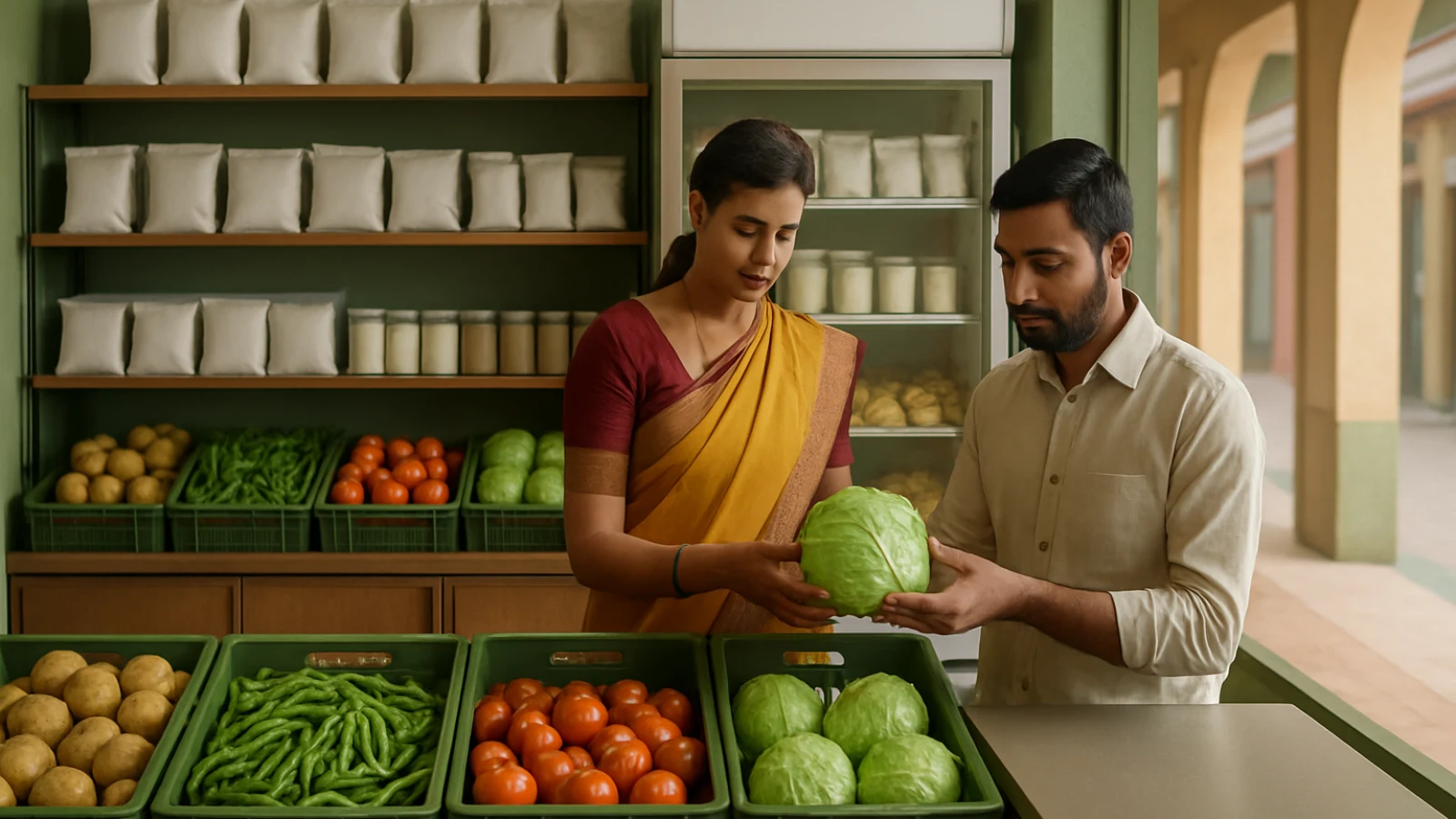
- Food and water: Choose an identified food business, inspect the service area, buy only the quantity the group can consume or carry safely, and avoid open-ended assumptions about free service.
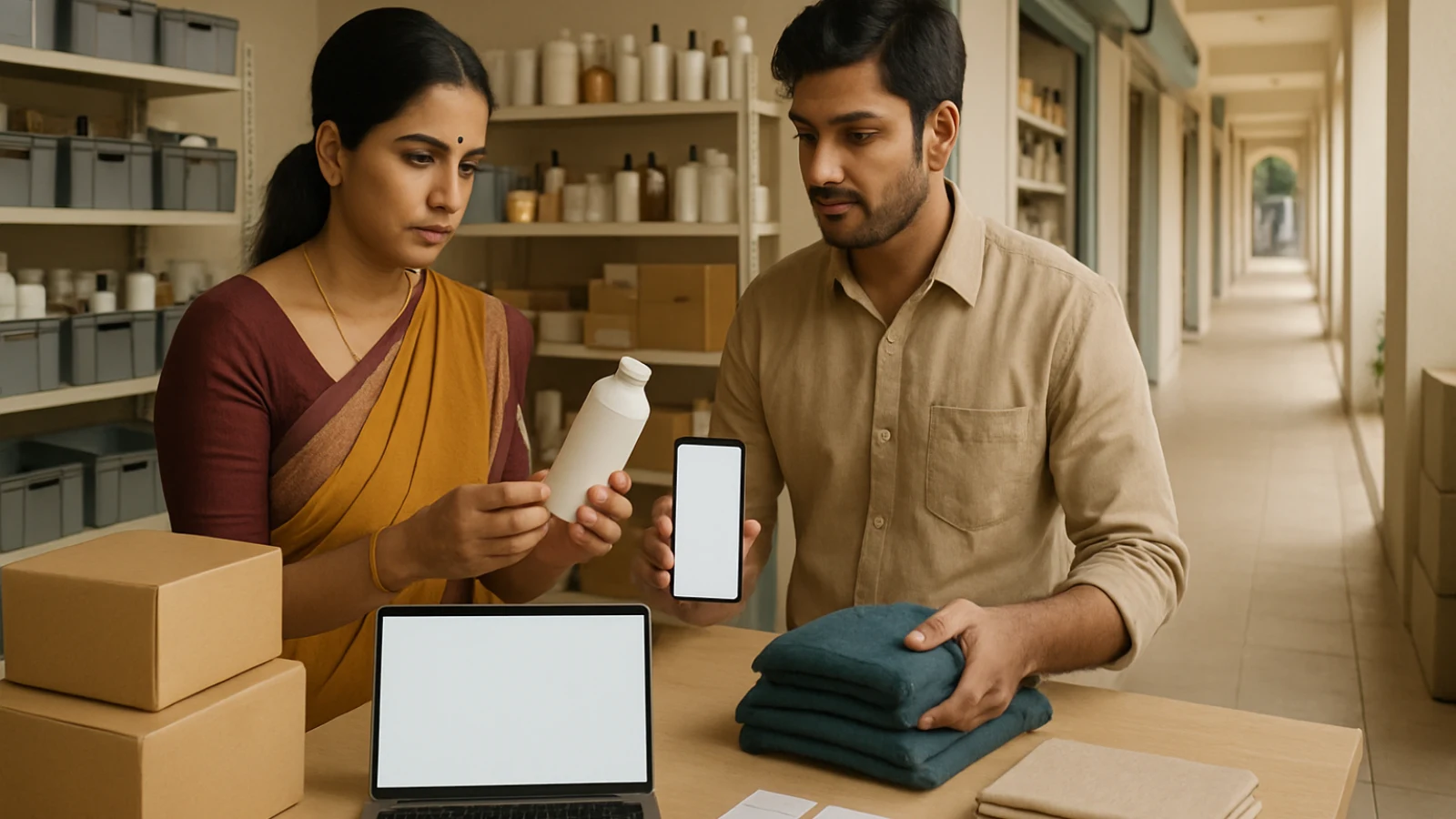
- Pharmacy: Send the person who has the prescription or knows the exact regular medicine. A retail counter is not a place for group diagnosis or sharing prescription drugs.
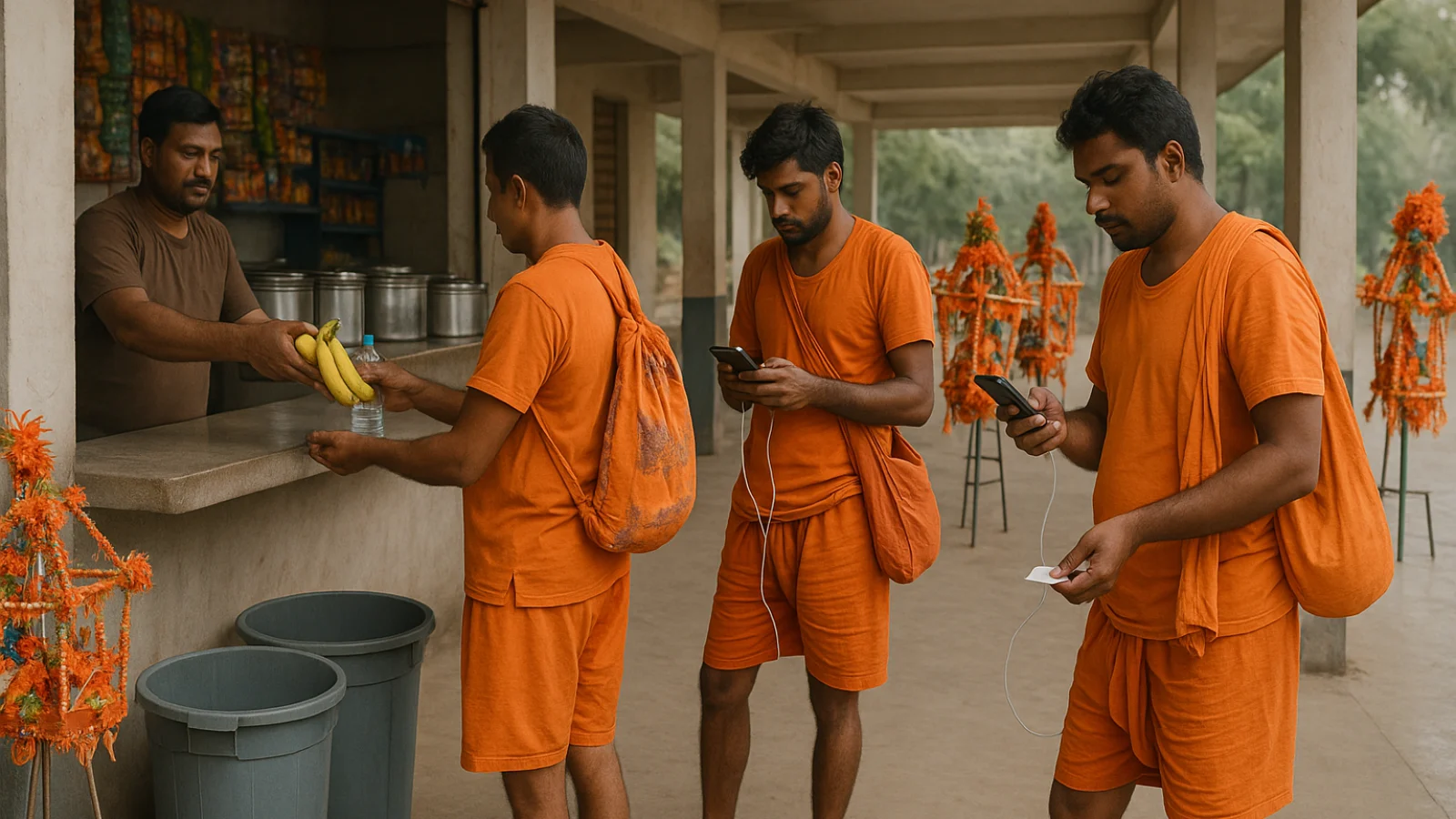
- Charging: Use personal cables and a dry, supervised point. Keep the phone visible and collect it before the group moves to the next counter.
- Waste exit: Separate leftover food, clean dry packaging and other waste according to the collection arrangement before leaving the stop.
This order reduces repeated movement, protects belongings and helps small Tarapur businesses serve pilgrims without turning a limited counter into an unsafe crowd.
Food counters: make cleanliness visible
FSSAI's safe-food materials cover personal hygiene, clean premises, safe receiving and storage, serving, sanitation, waste disposal and pest control. Its Hygiene Rating programme also expects an active FSSAI licence or registration and visible food-safety information as part of the compliance framework. For a temporary rush, the most useful response is not a huge menu. It is a short, manageable menu that staff can prepare, cover, serve and clear consistently.
For pilgrims, visible signals matter. Look for the business identity and FSSAI details, a clean service surface, covered food, clean utensils, a credible source of potable water, protected ingredients and a bin that is emptied before it overflows. Prefer food that has been prepared and handled under controlled conditions rather than items left exposed to dust, rain splash or repeated touching. Ask the price and portion before ordering.
For vendors, assign separate roles when possible: one person handles food, one takes payment and one manages the queue and waste. Do not handle cash and ready-to-eat food with the same unclean hands. Keep ingredients and packaging away from the floor, remove food waste from the service zone frequently, and pause service if water, power, crowding or sanitation conditions no longer support safe operation.
Pharmacy purchases: prescription, pack, price and receipt
The Drugs and Cosmetics Rules state that medicines supplied on a registered medical practitioner's prescription are to be supplied by or under the personal supervision of a registered pharmacist. That protects both the pilgrim and the pharmacy. A pilgrim should carry the original prescription or the reliable record required for a regular medicine and should not ask a retailer to improvise a diagnosis.
Before leaving the counter, check the medicine name, strength, dosage form, manufacturer, batch, expiry date, pack condition and printed price against the prescription and bill. Do not accept a damaged, unlabelled or loose item whose identity cannot be verified. Keep medicines in their original labelled packaging and follow the prescriber's instructions; this article does not recommend any medicine or dosage.
NPPA's official Pharma Sahi Daam tool lets consumers check government-listed prices for scheduled and non-scheduled medicines and provides a route for price-related complaints. It is useful for transparency, but it does not decide which medicine is clinically appropriate. Clinical questions belong with a qualified clinician or authorised medical service.
Charging without turning a counter into a hazard
BIS lists power adaptors for IT equipment and portable power banks under its compulsory registration scheme. A Tarapur shop selling or using spare charging equipment should therefore check the applicable BIS registration and product markings rather than buying anonymous stock only because it is cheap. Pilgrims should prefer their own compatible cable and power bank when available.
A responsible charging point is dry, ventilated, supervised and separated from food, wet footwear, metal waste and the main queue. It should not use damaged cables, loose sockets or a chain of overloaded extension boards. Devices should remain visible, and a simple token can identify the owner without collecting identity documents, unlocking phones or copying personal data. If conditions are wet, unstable or overcrowded, charging should stop.
Balram Complex has not publicly confirmed a charging service. Treat charging as a question for management, not an included facility. The same rule applies to power backup, sockets, cables, security and operating hours.
Fair local commerce during a pilgrimage rush
The National Consumer Helpline describes the right to safety, information, choice, a fair hearing, redressal and consumer education. For a busy Sawan counter, those principles translate into practical habits: display the current price, describe the product honestly, keep the printed label visible, issue a usable receipt where applicable, explain any return condition before payment and avoid claims of official affiliation that cannot be proved.
Pilgrims can help by ordering clearly, paying the stated amount through an agreed mode, checking change or payment confirmation, keeping the receipt, and raising a concern first with the business. If a consumer issue remains unresolved, the National Consumer Helpline provides official grievance channels. For medicine-price concerns, NPPA's specialised channel may be the more relevant first route.
Responsible selling also means refusing unsafe pressure. A shop should not promote unnecessary medicines, force a bundled purchase, claim a private product is government-approved without evidence, or promise that a purchase guarantees accommodation, darshan timing, transport or route access.
Waste planning is part of service design
Government waste-management resources emphasise segregation, collection and responsible handling of solid and plastic waste. In a pilgrimage setting, a counter should not mix everything into one overflowing bag. The exact local collection method and bin colours can vary, so follow the municipal or authorised collector's instructions rather than copying an unverified colour code.
A practical small-shop setup can separate food and other biodegradable waste, clean dry recyclables such as appropriate bottles or cartons, and residual or sanitary waste that needs protected handling. Used medicine strips, batteries, damaged power banks and electronic accessories should not be mixed casually with food waste. Hand separated material to the authorised local collection route and do not burn, bury or leave waste beside the road.
Pilgrims can reduce the load by carrying a reusable bag, refusing unnecessary packaging, keeping their own small waste pouch until an identified bin is available, and not leaving offerings, food or plastic around a rest point. Respect for the pilgrimage includes respect for the communities and workers managing the route and its surrounding markets.
A compact shop layout for an essentials stop
Even a small commercial unit can serve a seasonal rush if the flow is deliberate. The entrance should show the service list and prices. Fast purchases such as sealed water or basic packaged essentials can stay near the front without blocking the doorway. Food preparation or pharmacy dispensing must remain in the appropriate controlled area. A charging shelf, if offered and safely equipped, should be away from water and the payment queue. Waste bins belong near the exit but outside the food-handling zone.
Use one clear line and one pickup point. Keep a side path free for people who are not buying. Provide directions verbally without placing unverified route claims on a sign. A business should plan for a safe maximum queue and pause new orders when that limit is reached.
How Balram Complex fits into this plan
Balram Complex management has stated that stay or rest facilities are offered for Kanwariya pilgrims in Tarapur. The public website does not specify capacity, room or rest-space type, tariff, free service, booking confirmation, food, drinking water, toilets, bathing, parking, transport, pharmacy, charging, medical support, route status or availability for a particular date.
Therefore, send a precise enquiry before changing a walking or travel plan. State the intended date, arrival window, number of adults, approximate rest duration, one working contact and each required facility as a separate question. Wait for direct confirmation of availability, terms and the exact approach. Do not treat a website enquiry as a reservation, and do not treat Balram Complex as a medical, government, temple or official Kanwar-route facility.
Group leader's pre-departure card
- Write a short essentials list and remove items the group already carries.
- Set one spending limit and keep receipts together.
- Carry prescriptions and regular medicines with the correct pilgrim, not in a shared unlabelled pouch.
- Charge personal power banks before departure and label personal cables without exposing sensitive information.
- Keep one reusable shopping bag and separate waste pouch.
- Confirm the next authorised support point and current route instruction before leaving.
- Recount the group, phones, medicines, kanwars and receipts at the meeting point.
Frequently asked questions
What should a Kanwariya group buy in Tarapur?
Buy only what the next confirmed stage requires: safe water from an identified source, manageable food, prescribed or regular medicines from a proper pharmacy, and genuine essentials the group can carry. Avoid duplicate purchases, excessive packaging and products offered through pressure or unverifiable claims.
How can pilgrims assess a food counter quickly?
Look for the business identity and FSSAI details, clean food and service surfaces, covered items, clean utensils, protected ingredients, an orderly queue and controlled waste. Ask the price and portion before ordering. Leave if hygiene, water, crowding or storage conditions appear unsafe.
Can a pharmacy choose a prescription medicine for the group?
No group-level medicine choice should be improvised at a retail counter. Prescription medicines must follow a valid prescription and registered-pharmacist supervision. Use an authorised medical service or qualified clinician for diagnosis, treatment or a change in medicine.
How can a buyer check a medicine price?
Check the printed pack details and receipt, then use NPPA's official Pharma Sahi Daam search when needed. The tool supports price transparency and complaint routes; it does not replace a prescription or clinical advice.
Is phone charging confirmed at Balram Complex?
No. The public website does not confirm charging, sockets, cables, power backup, security or operating hours. Ask management directly and wait for confirmation. If charging is available, use a compatible personal cable and keep the device visible.
How should a small shop handle Sawan waste?
Separate food or biodegradable waste, clean dry recyclable material and residual or protected waste according to the local authorised collection arrangement. Keep bins out of the food zone, empty them before overflow and never leave mixed waste beside the road.
How do pilgrims enquire about a Balram Complex rest stop?
Use the site's Book Site Visit popup with the date, arrival window, adult group size, expected duration and required facilities written as questions. A submitted enquiry is not a booking; wait for management to confirm availability, terms and directions.
Sources used
- Bihar Tourism: Shrawani Mela 2026 route and public-facility information
- Bihar Tourism: Shrawani Mela 2026 dates and Somvari schedule
- FSSAI: Safe food handling and hygiene booklet for food handlers
- FSSAI: Hygiene Rating scheme for food businesses
- NPPA: Pharma Sahi Daam medicine-price checker
- CDSCO: Drugs and Cosmetics Act and Rules reference
- BIS: Scheme II compulsory registration list for electronics and IT goods
- Ministry of Environment: current waste-management rules and regulations index
- Ministry of Environment: Annual Report 2025-26 plastic-waste update
- National Consumer Helpline: official consumer rights
- Balram Complex: public contact and enquiry page
Planning a Tarapur rest enquiry? Use the Book Site Visit button shown on this page and wait for direct management confirmation before relying on any facility.