
Quick answer for Tarapur food retailers
National Nutrition Week is observed in India from 1 to 7 September. For a Tarapur grocery, fruit-and-vegetable outlet, dairy counter, bakery, snack shop, tea counter or packaged-food retailer, the useful business response is not a decorative “healthy food” claim. It is a seven-day audit of food-business registration, supplier records, product condition, stock rotation, storage, cleaning, customer information and honest promotion.
The official sources reviewed for this guide establish the annual week and provide current food-safety resources, but they do not announce a specific National Nutrition Week 2026 programme or theme in Tarapur. This article therefore does not claim a local government event, guaranteed demand, special approval or increased footfall. It gives shop owners a practical way to use the upcoming week for better operations that should remain useful after 7 September.
Separate nutrition awareness from medical advice
A food retailer can help customers find product information and a varied assortment. It should not diagnose a condition, prescribe a diet, promise weight loss, claim that one food controls diabetes or blood pressure, or present ordinary stock as a treatment. ICMR-National Institute of Nutrition’s Dietary Guidelines for Indians discuss balanced dietary patterns, variety, food safety, physical activity and the need to limit nutrients of concern. Those public-health principles are not a licence for a shop to create patient-specific advice.
Use manufacturer information and current regulatory requirements for product descriptions. When a customer asks for a clinical diet, allergy treatment, infant-feeding plan or supplement dosage, direct the question to an appropriately qualified professional. If a product makes a nutrition or health claim, do not strengthen, shorten or reinterpret that claim on a handwritten shelf card.
Start with the correct food-business registration path
FSSAI states that food businesses must be licensed or registered under the applicable framework. The correct route depends on the activity, kind of business, scale and current eligibility rules. FoSCoS is the official system for checking eligibility and applying, renewing or modifying a registration or licence. Retailers should use the current portal rather than relying on an old turnover figure copied from a blog, poster or forwarded message.
Before running a Nutrition Week promotion, compare the certificate with the actual activity at the premises. A packaged-food retailer, milk outlet, fruit-and-vegetable seller, snack counter and food preparation business may have different requirements. If the business activity, address, ownership or operating model has changed, use FoSCoS guidance or qualified assistance to determine whether modification is required. Do not display another business’s number or a pending application as if it were an active approval.
Audit the Food Safety Display Board
FSSAI’s Food Safety Display Board page explains that the registration or licence number must be visible at food premises and provides category-specific boards for different food businesses. The listed categories include retail stores, fruit and vegetable retail, milk retail, street food, storage, transport and distribution, among others. Use the board that matches the actual kind of business, not whichever design is easiest to download.
The FSSAI page also describes board sizes for registered and licensed businesses and says the content should remain readable over time. Before printing, confirm the current official sample, correct category and number. Place it where customers and food handlers can see it, without blocking an exit, price information or mandatory product details. A faded, altered or partly hidden board does not serve its purpose.
Build a seven-day readiness board
- Day 1, registration: Check the displayed FSSAI number, certificate details, business activity and validity against current records.
- Day 2, suppliers: Organise purchase invoices, supplier identity, delivery dates and product or batch references where applicable.
- Day 3, stock: Inspect seals, package damage, use-by or best-before information, pest signs and items held beyond their safe or declared life.
- Day 4, storage: Follow product instructions for temperature, separation, ventilation, moisture protection and raised dry storage.
- Day 5, cleaning: Assign opening, mid-day and closing checks for counters, tools, bins, drains, touchpoints and food-contact areas.
- Day 6, customer information: Review prices, labels, shelf cards and promotional messages for accuracy and legibility.
- Day 7, evidence: Record actual questions, wastage, damaged stock and sales by category before deciding what to reorder.
Category-wise checks for a Tarapur shop
Packaged grocery: Keep packets dry, intact and arranged so older saleable stock is considered before newer stock, subject to product condition and date information. Do not sell swollen, leaking, torn, pest-affected or otherwise compromised packs. Keep mandatory label information visible and do not hide it under a promotional sticker.
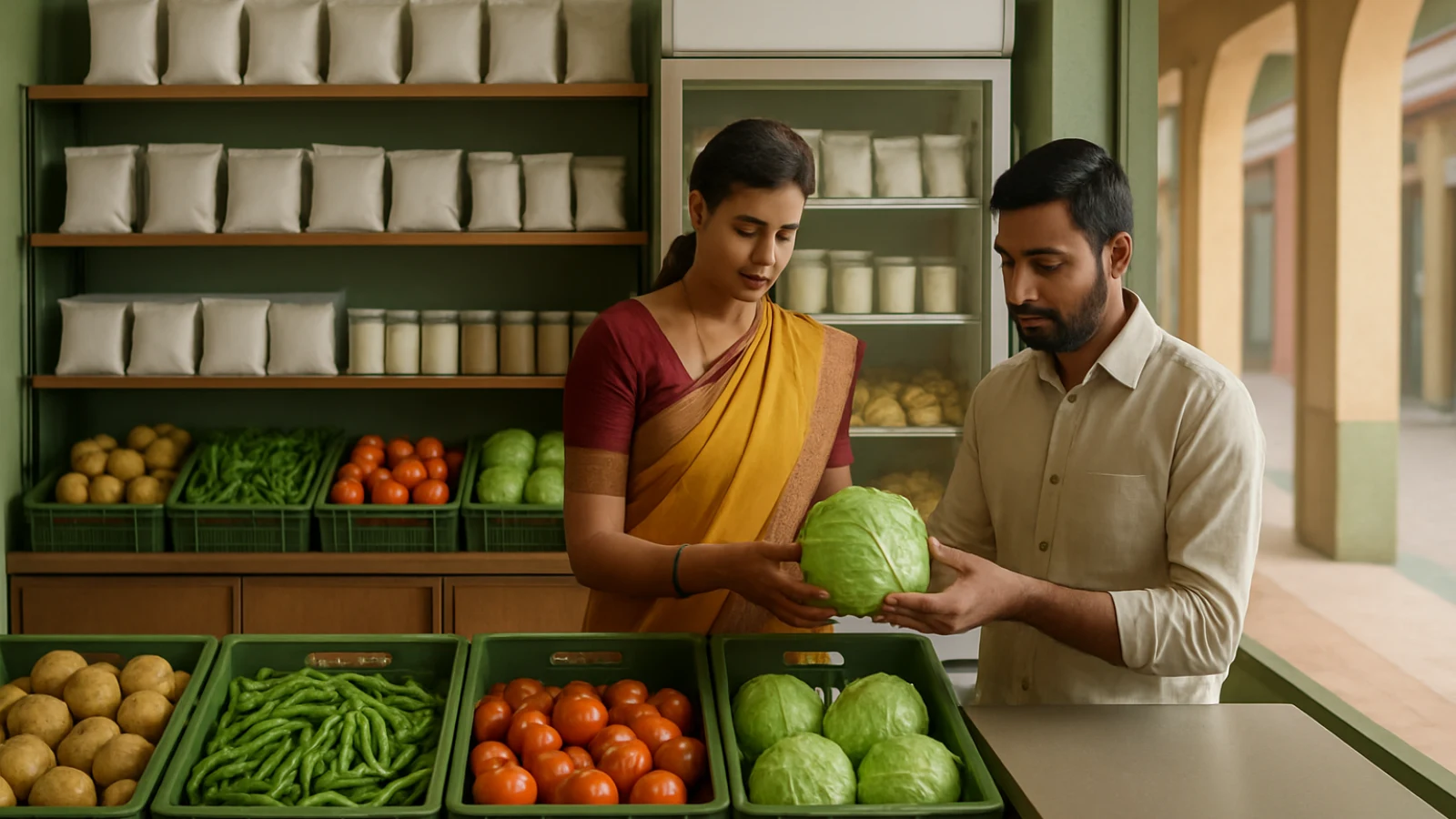
Fruit and vegetable retail: Sort damaged produce, use clean raised crates, separate waste promptly and keep the customer path dry during monsoon. Avoid spraying unknown substances or making claims that one fruit prevents or cures a disease. If produce is cut or prepared, the operation may need additional controls beyond ordinary whole-produce display.
Milk and chilled products: Follow the manufacturer’s storage instructions, monitor the equipment used for chilled stock and avoid repeatedly leaving products outside the intended environment. Keep the refrigerator clean and do not overload it in a way that prevents normal operation. A power interruption plan should identify which items require immediate assessment rather than automatic resale.
Tea, snacks and bakery items: Keep prepared food protected from dust, pests and unnecessary handling. Use clean utensils and safe water, separate cleaning chemicals from ingredients, manage waste before it attracts pests, and avoid keeping prepared food for an unsupported period. Write down the preparation and disposal routine so every staff member follows the same rule.
Use labels and standards without improvisation
FSSAI’s product-standards page links to the current regulations covering food products, additives, contaminants, packaging, labelling and specialised categories. The correct requirement depends on the product and business role. A retailer should not treat a draft notification, old screenshot or supplier’s verbal summary as the final rule.
When buying packaged stock, match the item delivered to the invoice and inspect the label before it reaches the shelf. Keep manufacturer or marketer details, lot or batch information, dates and storage instructions legible where applicable. If a package appears relabelled, altered or inconsistent with the invoice, hold it away from sale and resolve the discrepancy with the supplier. Do not create a “sugar free,” “high protein,” “organic,” “fortified” or similar claim unless the product validly carries that information under applicable requirements.
Make a nutrition display useful, not misleading
A responsible display can group ordinary foods by customer task without ranking one product as a cure. Examples include breakfast staples, pulses and grains, nuts and seeds, fresh produce, dairy choices, water and simple cooking ingredients. Keep manufacturer-provided nutrition information facing the customer where practical. Use neutral prompts such as “compare the label,” “check the serving information” and “ask about current stock.”
Do not create before-and-after images, guaranteed body-change claims or fear-based messages. Do not imply that a higher price means better nutrition. A shop may share a link to an official public-health resource, but should not copy large portions into a commercial poster or edit a government graphic to add its own endorsement.
Control stock, waste and cash together
Nutrition Week stock should not become food waste. For each category, record opening quantity, units received, units sold, damaged units, expired or time-expired units, returns and closing quantity. Investigate differences instead of hiding them in a general wastage number. Order more only when sales, confirmed enquiries and supplier lead time support the decision.
Keep promotion-specific purchases small when the item has no local history. Agree supplier return terms before purchase, not after the week ends. Do not move a date sticker, mix old product into a new package or discount compromised food back into sale. A safe disposal record is preferable to an unsafe recovery attempt.
Plan a small food-shop layout
A compact unit needs a clean flow from receiving to storage, display, billing and waste removal. Keep cartons and food stock above a damp floor, separate food from cleaning chemicals, leave access for cleaning under and behind equipment, and prevent customer queues from crossing preparation or receiving areas. If chilled equipment is planned, check the electrical load and service access before installation rather than after the shop opens.
Use one clear promotional zone instead of covering every shelf. The display should not hide the Food Safety Display Board, fire access, product labels or the billing counter. During a Balram Complex site visit, bring a measured sketch showing racks, refrigerator, counter, handwashing or cleaning needs where applicable, waste route and the widest expected customer queue.
How to evaluate a Balram Complex unit
A prospective food retailer should ask management directly about current unit availability, permitted activity, fit-out, signage, electrical arrangements, water-related requirements, waste handling and commercial terms. This article does not confirm a specific shop, food-use permission, utility, rent or amenity. Regulatory approval for the food business remains the operator’s responsibility.
Judge the unit on daily food-safety operation after National Nutrition Week, not only on whether a themed display fits for seven days. The strongest result is a shop with clearer records, safer stock, accurate customer information and a layout that staff can clean and operate consistently.
Frequently asked questions
When is National Nutrition Week observed in India?
Government information identifies 1 to 7 September as National Nutrition Week. The sources reviewed for this guide do not announce a specific 2026 theme or government event in Tarapur, so retailers should not advertise one without an authoritative current notice.
Does a small Tarapur food shop need FSSAI registration?
FSSAI says food businesses must be licensed or registered under the applicable framework. The correct category depends on the current activity and eligibility rules. Use FoSCoS to check the business type and current path rather than relying on an old threshold or another shop’s certificate.
Which Food Safety Display Board should a retailer use?
Use the current FSSAI board for the shop’s actual kind of food business, such as retail store, fruit and vegetable retail or milk retail. Confirm the official sample, size, number and registration or licence details before printing or displaying it.
Can a shop call ordinary products healthy or disease-friendly?
A retailer should not invent or expand nutrition, health or disease claims. Use valid manufacturer information and current FSSAI requirements. Patient-specific diets, allergies, infant feeding, supplement dosage and disease management should be referred to appropriately qualified professionals.
What records should be checked before a food promotion?
Check supplier invoices, delivery dates, product and batch references where applicable, package condition, date information, storage instructions, cleaning records, damaged stock, wastage and the correct business certificate. The exact record set depends on the operation and product.
How should chilled stock be handled during a power interruption?
Follow the product’s storage instructions and the business’s documented food-safety process. Record the interruption and assess affected stock rather than assuming it is safe. When safety is uncertain, seek competent guidance and keep the item away from sale.
What should a food-business site visit at Balram Complex cover?
Test the receiving route, dry and chilled storage, customer aisle, counter, cleaning access, waste route and equipment placement. Confirm current availability, permitted activity, utilities, fit-out and commercial terms directly with management before committing.
Sources used
- PIB and Ministry of Women and Child Development: National Nutrition Week is observed from 1 to 7 September
- FSSAI Food Safety Display Boards for food businesses, including retail, dairy, produce and street-food categories
- FSSAI Food Safety Compliance System for current registration, licensing, eligibility and user guidance
- FSSAI product-standards page listing current food safety, packaging, labelling and related regulations
- ICMR-National Institute of Nutrition Dietary Guidelines for Indians 2024
- FSSAI Eat Right India initiative for safe, healthy and sustainable food-system awareness
- Balram Complex public shop index for current shop and site-visit context
CTA: Use the Book Site Visit button to compare a Balram Complex unit with your food-retail storage, hygiene, equipment and customer-flow plan. Current availability, permitted activity and terms must be confirmed with management.