
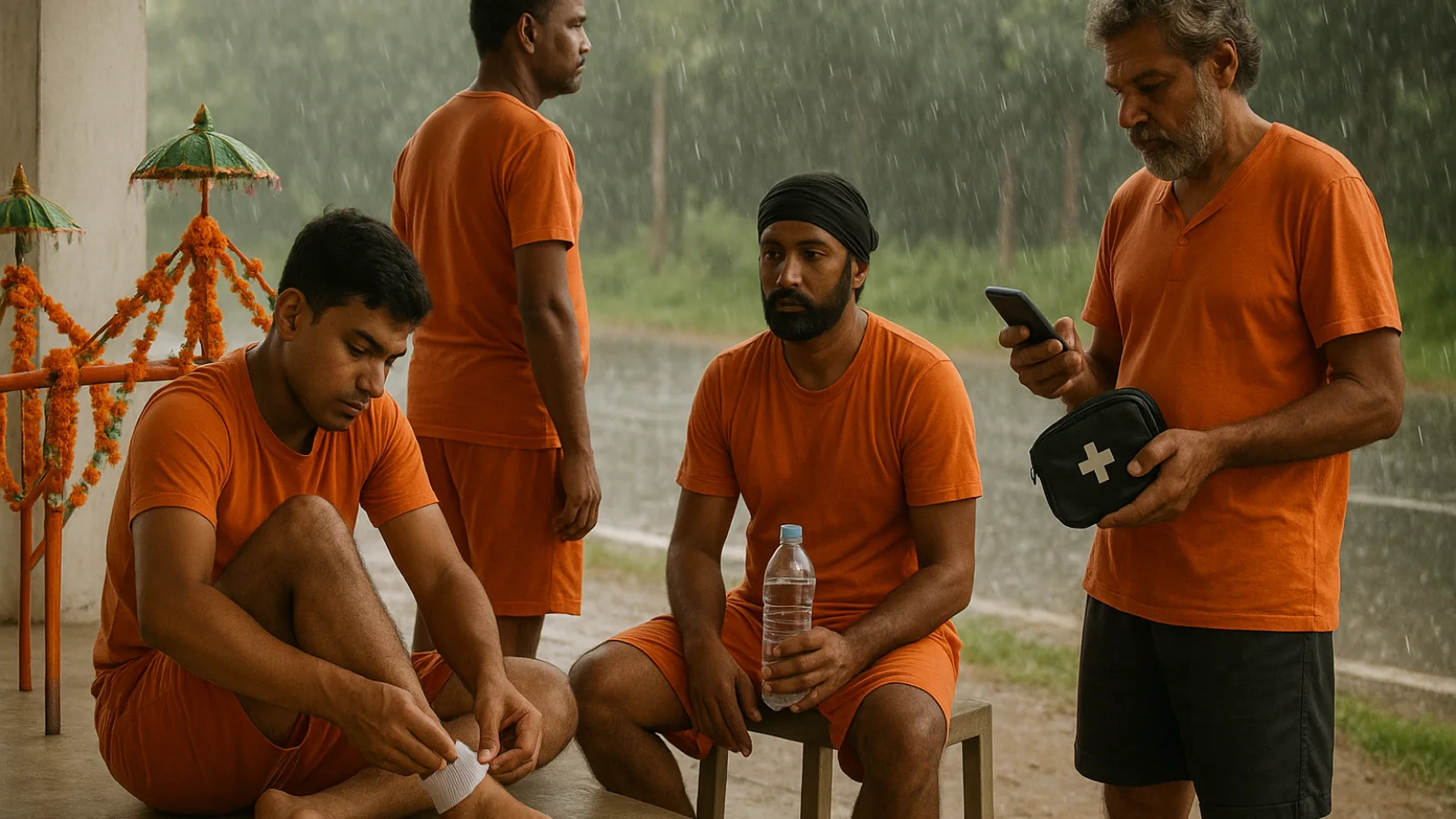
Quick answer: A Sawan walking plan should change with the monsoon, not fight it. Before each stage, check current IMD or authorised alerts; carry safe drinking water and prescribed medicines; inspect, clean and dry feet at breaks; avoid unknown standing or flood water; wash hands before eating and after toilet or wound care; and stop for authorised help when a pilgrim is confused, faints, cannot keep fluids down, has severe breathing difficulty, uncontrolled bleeding or another urgent warning sign.
This is a practical preparedness guide, not a diagnosis or treatment plan. Individual needs differ, especially for older adults, pregnant pilgrims, people with diabetes, heart or kidney conditions, people taking regular medicines, and anyone recovering from illness. Such pilgrims should seek advice from their own qualified clinician before a demanding walk and should never change prescribed medicine because of a blog article.
Why this checklist matters now
Bihar Tourism lists Shrawani Mela 2026 from 30 July to 28 August, with the first Somvari on 3 August. Its official mela page describes drinking water, rest shelters, medical aid, sanitation, lighting and tented accommodation at points along the pilgrimage corridor. These are valuable public supports, but they do not remove the need for group-level weather, hydration, foot and hygiene planning between support points.
Monsoon conditions can change faster than a static article. IMD Met Centre Patna provides Bihar forecasts, district warnings and nowcasts, while the NDMA Sachet portal distributes authorised, location-aware disaster alerts. The correct question is therefore not “Will it rain on the whole journey?” It is “What do the latest authorised alerts say for our next stage, and where will we pause if conditions become unsafe?”
Use a weather-first departure gate
Assign one adult group lead and one backup to check official weather and route instructions before departure, after long breaks and whenever the sky or road condition changes. Record the next recognised support point, a safe shelter option and the point at which the group will stop rather than improvise.
- Green: No relevant warning, the route is open under current instructions, the group is together and the next support point is understood.
- Pause and reassess: Rain intensifies, visibility falls, water starts crossing the walking surface, thunder is heard, a police diversion appears, or group members cannot maintain safe coordination.
- Stop and seek authorised direction: Lightning risk, fast-moving or unknown-depth water, a closed route, a missing group member, or a health event makes continued walking unsafe.
Do not shelter under an isolated tree, stand in open water, touch fallen electrical lines or cross a flooded section because another group did so. Follow police, district, IMD and disaster-management directions even when that changes the planned timing.
Hydration without guesswork
Long walking, humidity, rain gear and crowd movement can all affect fluid needs. There is no safe single quantity that fits every adult or every medical condition. Use safe drinking water regularly, carry water while moving, and make refilling part of the stage plan rather than waiting for a crisis. A companion should notice unusual weakness, confusion, fainting, repeated vomiting or inability to drink and should seek authorised medical help instead of pushing the person onward.
Use only water from a source the authorities or provider identify as safe. A clear-looking stream, roadside tap or stored container is not automatically safe. If packaged water is used, check that the seal is intact. Do not share bottle mouths. Oral rehydration solution can be useful in appropriate situations, but it must be a genuine packet mixed exactly as its label or a health professional directs; making it stronger, weaker or using it as a substitute for urgent assessment can be unsafe.
Foot care at every proper break
Friction, moisture and continued pressure can turn a small hot spot into a painful blister. NHS guidance recommends comfortable, well-fitting footwear where compatible with the pilgrim's practice, changing damp socks, keeping a blister clean and covering it with a soft plaster or padded dressing. It also advises against bursting a blister or peeling the skin from a burst blister.
Some Kanwariyas choose to walk barefoot as part of their observance. This guide does not decide a religious practice for anyone. The safety response is to inspect feet during authorised breaks, gently clean away dirt using safe water, pat feet dry, protect an intact sore area from further friction, and avoid unknown floodwater, sharp debris and contaminated mud. Do not apply fuel, industrial chemicals, unknown powders or other harsh substances to skin.
Stop walking and seek qualified care when a foot wound is deep, heavily contaminated, bleeding does not stop, pain prevents safe walking, or redness, swelling, warmth, pus, fever or red streaking suggests possible infection. People with diabetes, poor circulation or reduced foot sensation should use a lower threshold for professional assessment.
Standing water and wound hygiene
NCDC's monsoon leptospirosis guidance advises avoiding potentially contaminated stagnant or flooded water and areas frequented by rodents, using protective clothing when exposure cannot be avoided, and washing thoroughly with soap and water after possible exposure. For a walking group, that means a puddle or flooded shortcut is not a harmless inconvenience, particularly when someone has cuts, blisters or broken skin.
If a minor wound occurs, move to a safe dry place first. Wash hands if possible, use clean water to remove visible dirt, pat dry and cover with a clean dressing. Do not keep walking through contaminated water with an open wound. Deep, puncture, animal-bite or badly contaminated wounds need professional assessment rather than improvised treatment.
Food, hands and shared rest spaces
WHO's five keys to safer food are simple: keep clean; separate raw and cooked items; cook thoroughly; keep food at safe temperatures; and use safe water and raw materials. For pilgrims, freshly prepared hot food from a clean service point is a safer choice than food that has sat uncovered or lukewarm for an unknown time.
Wash hands with soap and safe water before eating, after using a toilet, after touching waste and before or after wound care. When soap and water are not available and hands are not visibly dirty, an alcohol-based hand sanitiser can be a temporary option, but it does not make unsafe water or food safe. Keep personal towels, cups, bottles and medicines separate rather than passing them around the group.
Build a compact group health kit
- Safe drinking water and a refill plan tied to recognised support points.
- Each pilgrim's prescribed medicines in original labelled packaging, with enough for delays.
- Clean dry socks where used, soft dressings, plasters and a small clean cloth.
- Soap or hand cleanser, labelled sanitiser and a separate bag for used dressings and waste.
- A charged phone, power bank, waterproof cover and offline copy of essential contacts.
- A written list of allergies, important conditions and the group lead's contact, shared only when needed for care.
- A rain layer that does not block vision or create a trip hazard around the kanwar.
Do not distribute prescription drugs, antibiotics, injections or unlabelled tablets across the group. A first-aid pouch supports basic protection while authorised help is reached; it does not turn the group lead or a private rest host into a medical provider.
Define the emergency handover
Before walking, decide who calls for help, who stays with the unwell pilgrim, who keeps the rest of the group together and who carries the person's medicine list. When contacting an authorised service, give the current location or recognised landmark, direction of travel, number of people affected, the main observable problem and a working callback number. Do not delay the call while trying to diagnose the condition.
Bihar Tourism identifies public support along the corridor, and Deoghar district publishes destination-side Shrawani Mela information and official contacts. Keep those current pages accessible; copied numbers can become outdated. A private property, shop or volunteer should not be treated as a replacement for police, ambulance, hospital, disaster or temple administration.
How Balram Complex fits into a rest plan
Balram Complex management has stated that stay or rest facilities are offered for Kanwariya pilgrims in Tarapur. The public website does not specify the facility type, capacity, tariff, hours, included amenities, medical support or availability for a particular date. It also does not establish that the property is directly on the official walking route.
Therefore, treat Balram Complex only as a private rest enquiry option. Ask management to confirm the date, arrival window, adult group size, rest duration, exact approach, applicable terms and any essential requirement. Do not assume drinking water, food, bathing, toilets, charging, parking, transport, first aid or clinical care is included unless management specifically confirms it. Current police and route instructions remain controlling.
Frequently asked questions
Is this article medical advice?
No. It is a planning checklist based on official public-health, weather and pilgrimage sources. It cannot assess an individual, diagnose a condition or replace a qualified clinician, ambulance, hospital or authorised on-route medical team.
How much water should every Kanwariya drink?
There is no universal amount suitable for every adult, weather condition or medical history. Carry safe water, drink regularly, plan recognised refill points and follow individual clinical advice. Confusion, fainting, repeated vomiting or inability to drink requires authorised medical assessment.
Should a walking blister be burst?
NHS guidance advises not bursting a blister yourself and not peeling the skin from a burst blister. Keep it clean, protect it with a soft or padded dressing and seek professional help if infection, severe pain or an unsafe wound is suspected.
What should a group do when the route is waterlogged?
Pause and follow current police, district, IMD or disaster-management directions. Do not test unknown-depth water, use an unverified shortcut or separate the group. Avoid stagnant or flooded water, especially when anyone has cuts, blisters or broken skin.
Does Balram Complex provide medical care?
No medical service is claimed. Management has stated that a stay or rest option is offered, but the public site does not list medical facilities or included amenities. Use authorised public or clinical services for health needs.
What belongs in a Balram Complex rest enquiry?
Provide the intended date, arrival window, number of adults, approximate rest duration, one working contact and essential requirements phrased as questions. Do not send medical files, identity images, banking details or payment information in the first website enquiry.
What should a group lead keep available offline?
Keep the next authorised support point, current weather and route links, emergency contacts, group list, key medicine or allergy information, destination confirmation and a backup meeting point. Recheck live instructions whenever connectivity returns.
Sources used
- Bihar Tourism: Shrawani Mela 2026 official route and public facilities
- Bihar Tourism: current Shrawani Mela 2026 dates and Somvari schedule
- IMD Met Centre Patna: Bihar forecasts, district warnings and nowcasts
- NDMA Sachet: authorised disaster alerts and safety information
- NCDC: current climate and monsoon health preparedness resources
- NCDC: Programme for Prevention and Control of Leptospirosis
- NCDC public-health advisory: emergency wound care after flood exposure
- NHS: blister protection, care and warning signs
- WHO: five keys to safer food
- Deoghar district: official Shrawani Mela information and contacts
- Balram Complex: public contact and enquiry page
Need to ask about a Tarapur rest stop? Send a complete enquiry and wait for direct management confirmation before changing your route or relying on any facility.
Ask Balram Complex about a rest stop