Quick answer for Tarapur retailers
Incredible India lists Raksha Bandhan on Friday, 28 August 2026. For a Tarapur retailer, that creates a useful planning window from today, 16 August, for checking customer requests, setting a buying ceiling, testing small quantities, preparing gift combinations and writing clear pre-order and exchange terms. The date is verified; future demand, footfall, price and profit are not. A shop should use its own bills, enquiries and available cash before deciding what to stock.
Raksha Bandhan traditionally centres on the bond between siblings, the tying of a rakhi and the exchange of gifts. A local shop can serve that occasion without overbuying. The practical goal is to make a few relevant choices easy to compare, keep food and packaged products compliant, separate paid orders from walk-in stock and ensure that every payment can be matched to an order record.
Why 16 August is a useful planning date
With the festival on 28 August, retailers still have time to verify suppliers and trial products instead of accepting an urgent bulk offer. The first decision is not how many pieces to buy. It is which customer problem the shop can solve: a simple rakhi, a ready gift, a sweet add-on, a sibling gift within a stated budget, or a pre-packed pickup for a family that wants to avoid a last-day queue.
This article does not claim that Balram Complex or any Tarapur shop will receive higher footfall. It does not recommend a supplier or predict a winning category. It converts the verified festival date into a conservative operating checklist that can be used by garment, cosmetics, gift, stationery, toy, footwear, mobile-accessory, bakery, sweet, grocery and daily-needs retailers.
Set a category budget before speaking to suppliers
Write one number for the total seasonal buying ceiling and divide it by category. Keep separate limits for rakhi stock, gift items, packaging material and food add-ons. Include transport, damaged pieces, unsold stock and any supplier minimum in the landed-cost estimate. Do not treat a discount on a larger quantity as a saving if the shop cannot explain how the extra units will be sold or reused after the festival.
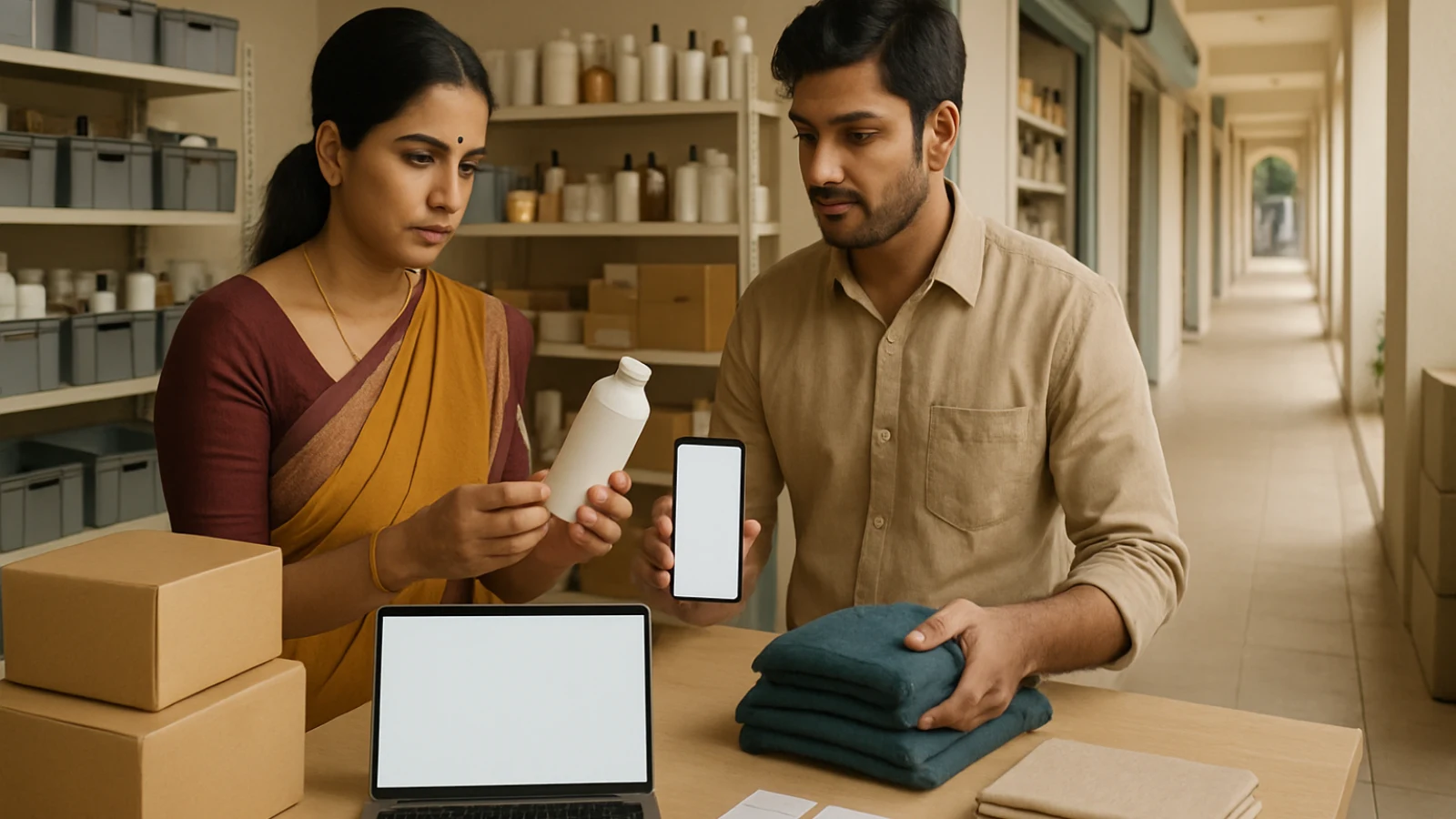
Use three evidence points: last year's relevant bills if available, customer requests received this year and current non-seasonal sales in related categories. If the evidence is weak, order a small trial, photograph the available choices and accept traceable pre-orders before replenishing. A controlled second order is usually easier to manage than a speculative first order.
Build a three-layer assortment
- Essential layer: A limited choice of simple rakhis, envelopes, small gift bags and common add-ons with easy-to-understand prices.
- Useful gift layer: A few practical items already related to the shop's normal category, such as stationery sets, personal-care combinations, accessories, garments or age-appropriate toys.
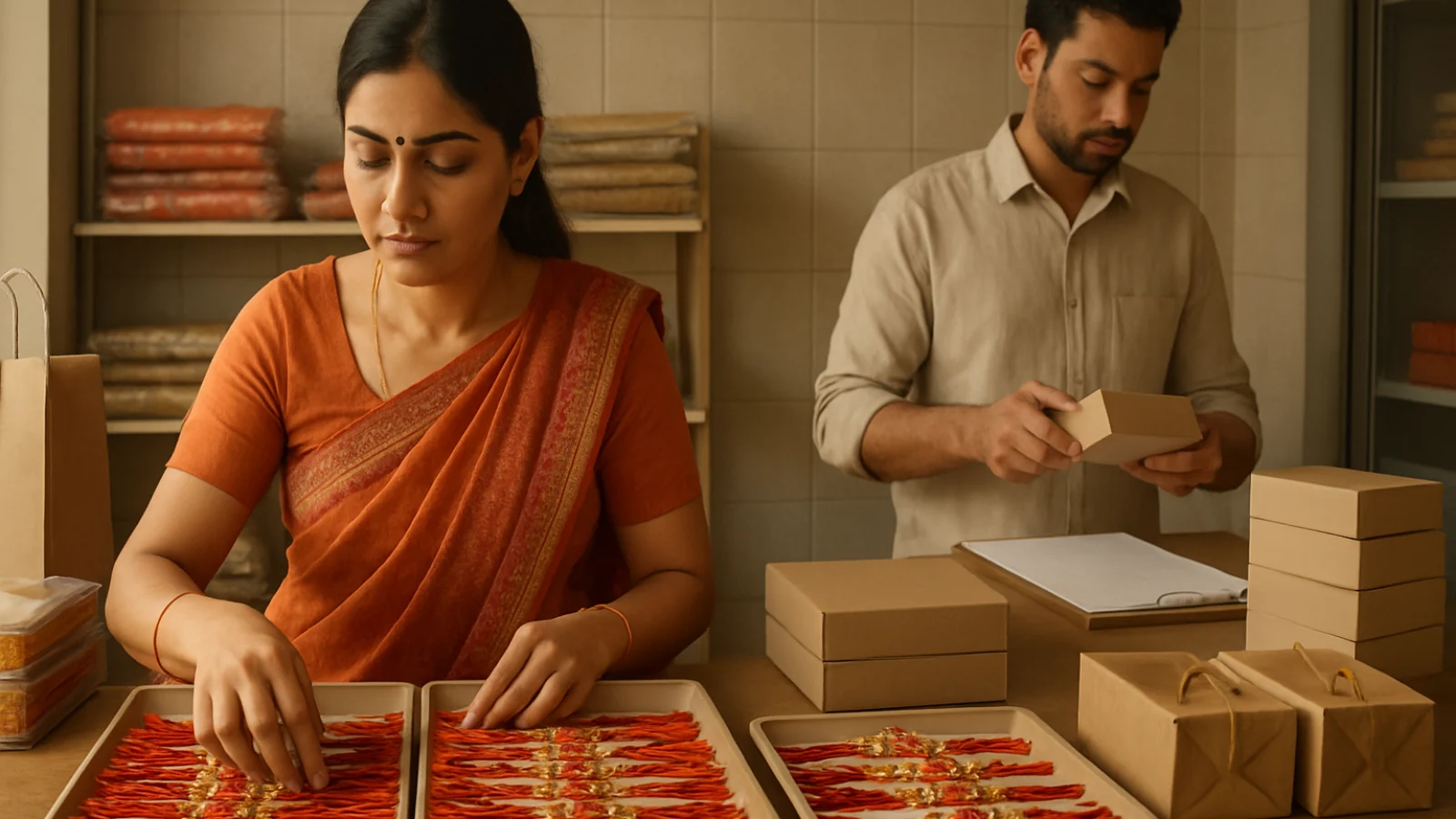
- Pre-order layer: Higher-value, customised or food-linked combinations prepared only after the item, amount, pickup time and terms are recorded.
Give each layer a visible price range, but do not create a false crossed-out price or an unsupported “limited stock” claim. Keep display units separate from sealed sale units. Count every component in a bundle so the billing counter can identify shortages before the customer arrives.
Use a written supplier and receiving checklist
Ask for the legal business name, contact, invoice commitment, product description, quantity, unit rate, tax treatment where applicable, dispatch date, replacement process and transport responsibility in writing. Check a sample for finishing, closures, sharp edges, colour transfer, damaged packaging and mismatch between the sample and the quoted item. Decorative products intended for children need especially careful physical inspection; do not make safety claims that the supplier has not documented.
At delivery, count saleable units rather than cartons alone. Match variants to the order, photograph damage before mixing stock, record shortages and retain the invoice and supplier message. Assign one internal item code to each bundle. If a bundle changes, update the code or description so the counter does not charge for a component that is missing.
Sweets and food add-ons need a separate control
FSSAI states that every food business operator must be licensed or registered under the applicable framework. A retailer adding sweets, bakery items, snacks or prepared food should confirm the correct category and current requirement through FSSAI or FoSCoS rather than assuming that a festival counter is exempt.
FSSAI's order for sweets says that pre-packed sweets must carry the required date information on the label, and containers or trays holding non-packaged sweets for sale should display the date of manufacturing and best-before date. The food business operator decides the best-before date according to the product and local conditions. A Tarapur retailer should therefore obtain date and handling information from the responsible food business, protect food from dust and heat, separate it from non-food products and avoid preparing more pickup packs than can be handled safely.
Check retail packages before creating gift combinations
The Department of Consumer Affairs explains that covered retail packages require declarations such as manufacturer, packer or importer details; country of origin for imported products; the common or generic product name; net quantity; applicable date information; maximum retail price inclusive of taxes; consumer-care details and other category-specific information. A decorative outer wrap should not hide information that the customer needs to inspect.
When multiple packaged products are grouped into one paid combination, verify how the Legal Metrology and product-specific rules apply to the final offer. Keep the component list and final charged amount clear on the bill. Do not transfer a branded product into an unlabelled container or make the shop appear to be the manufacturer unless the legal and food-safety responsibilities have been checked.
Make pre-orders traceable
For every pre-order, record an order number, customer name and mobile number, exact item or bundle, quantity, total amount, advance received, balance due, pickup date and time, and the stated cancellation or replacement terms. Give the customer the same summary. Mark paid stock physically or digitally so it is not sold to a walk-in customer.
The Indian Cybercrime Coordination Centre's safety material advises users to verify the payee or QR code and states that a UPI PIN is not required to receive money. A retailer should confirm a payment from the shop's own bank or payment application and match the transaction reference to the order. A screenshot alone should not be treated as settlement. Never ask a customer to share a UPI PIN, and do not scan an unknown QR code to “receive” an advance.
Write exchange and pickup rules before taking money
Display a short, readable policy covering the final pickup time, unused-item exchange conditions, treatment of damaged or incorrect goods, food-item restrictions, personalised orders and how an approved refund will be processed. The exact policy must comply with applicable consumer and product rules. The purpose of writing it early is to avoid different promises from different staff members.
Inspect a packed order with the customer at pickup where practical. Record whether the pack was complete and collect the balance through the normal billing flow. Keep damaged-stock decisions separate from a customer's change of preference. A clear exception process protects both the customer and the shop better than a blanket verbal promise.
A practical 12-day operating sequence
- 16-18 August: Review bills and enquiries, choose categories, set the total buying ceiling and confirm supplier terms.
- 19-22 August: Inspect samples, place trial orders, write item codes and confirm food or package information.
- 23-25 August: Build a small display, photograph actual available items, open traceable pre-orders and test the pickup workflow.
- 26-28 August: Replenish only against evidence, separate paid orders, check food dates daily and keep the counter ready for quick billing.
Do not publish a product as available until it is physically received or a reliable supplier commitment is documented. Stop taking pre-orders when the shop can no longer prepare and verify them without confusion.
Plan the shop layout, not only the products
Keep the entry clear, place low-price comparisons where they can be read without blocking movement and create a separate pickup point for paid orders. Food should be protected and separated from cosmetics, chemicals, dusty packaging and handling materials. Keep the billing device, printer, order list and charging point in one controlled work area.
During a Balram Complex site visit, ask where seasonal display, sealed stock, food pickup and customer waiting would fit without obstructing the shop. Confirm current unit availability, permitted use, utilities, storage, fit-out and management terms directly. This guide does not claim that every unit is suitable for every retail or food category.
Frequently asked questions
When is Raksha Bandhan in 2026?
Incredible India's official festival page lists Raksha Bandhan on Friday, 28 August 2026. Retailers should still confirm any local opening, delivery or staffing arrangements directly because a festival date does not determine a shop's operating schedule.
Does the festival date prove that demand will rise in Tarapur?
No. The date establishes a planning occasion, not demand, footfall or profit. Use this year's enquiries, previous bills, available cash and small trial orders. Replenish only when real sales or traceable pre-orders support it.
Can loose sweets be displayed without date information?
FSSAI's sweets order says the container or tray holding non-packaged sweets for sale should display the manufacturing date and best-before date. The responsible food business operator determines the best-before date according to the product and local conditions.
Does a temporary festival food counter need FSSAI registration?
FSSAI says every food business operator must be licensed or registered under the applicable framework. The correct category depends on the activity and current rules, so confirm it through FSSAI or FoSCoS before selling food.
What is the safest way to record a UPI pre-order payment?
Create an order number, verify success in the shop's own bank or payment application, save the transaction reference and issue the same order summary to the customer. Do not rely only on a screenshot and never ask for a customer's UPI PIN.
Can a gift bundle ignore the labels on packaged products?
No. Do not cover or discard required declarations. If several products are sold together, verify the rules for the final combination, keep the component list and charged amount clear, and seek category-specific guidance where necessary.
Is every Balram Complex shop suitable for a Raksha Bandhan retail setup?
Not automatically. Suitability depends on current availability, permitted use, layout, storage, utilities, food-handling needs, fit-out and management approval. Inspect the exact unit and confirm terms before buying stock or accepting orders.
Sources and review date
- Incredible India: Raksha Bandhan date and festival context for 28 August 2026
- Bihar State Centre: official Raksha Bandhan holiday page
- FSSAI: food business licensing and registration requirements
- FSSAI: manufacturing and best-before date display for sweets
- Department of Consumer Affairs: Legal Metrology overview and retail package declarations
- Indian Cybercrime Coordination Centre: digital-payment and UPI safety manual
- Balram Complex: current public shop listings
Reviewed: 16 August 2026. Festival, food-safety, package-declaration and payment-safety references were checked against the linked official sources. Rules and services can change, so verify the current category-specific position before selling.
Next step: Review Balram Complex shop listings and use the Book Site Visit popup to discuss display, storage, pickup flow and a suitable unit. Current availability and terms must be confirmed with management.