Why the eSaras update matters around Tarapur
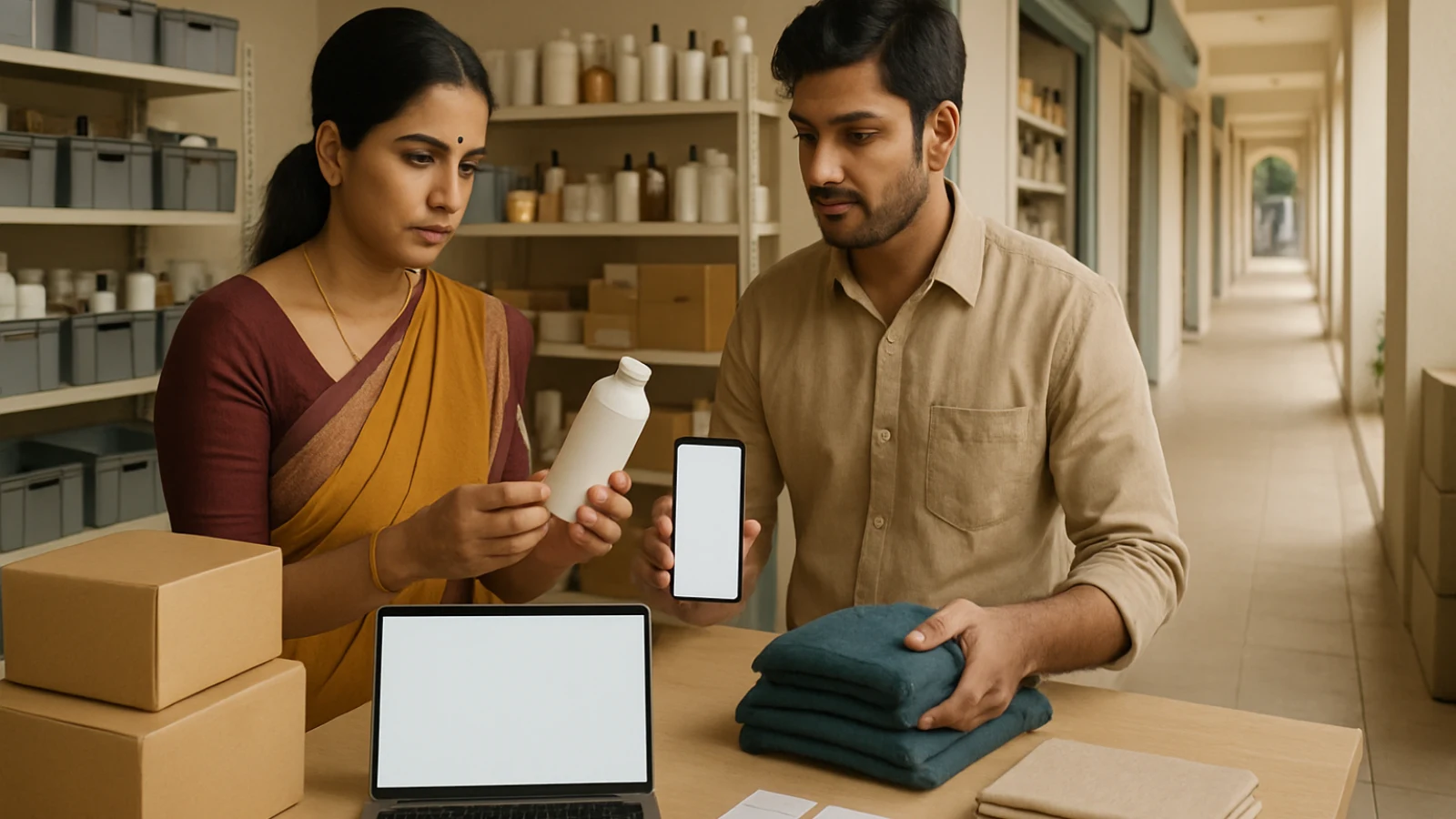
A rural product can be well made and still struggle to reach the right buyer if its photographs, price, packaging, stock record and delivery process are not ready. That gap is relevant around Tarapur, where women-led self-help groups, producer collectives and small rural enterprises may make food products, textiles, craft items, household goods or regional specialties. A shop or organised workspace can support local sales, but digital commerce requires an additional operating system behind the counter.
On 11 July 2026, a Government of India Digital India update highlighted eSaras as a government-backed marketplace connecting rural producers with customers. The release says the platform was developed by Digital India Corporation under the Ministry of Electronics and Information Technology in collaboration with the Ministry of Rural Development, and is implemented under DAY-NRLM. It described more than 1,400 products on the platform and access through ONDC-enabled buyer applications.
First check: who can register as a seller?
eSaras is not an open marketplace for every unrelated retailer. Its official registration page lists seller identity paths for an SHG or individual SHG, a Cluster Level Federation, and an FPO or Producer Enterprise. A Tarapur business should confirm its entity type and current eligibility through the official seller route before spending money on labels, bulk packaging or outside consultants.
The official registration page asks sellers to prepare identity or registration details, GST information, PAN and bank account details. It also states that uploaded documents should be no larger than 1 MB each and may use PDF, JPG, JPEG or PNG formats. Requirements and tax treatment can differ by seller and product, so current portal instructions should be checked at the time of registration.
What the official workflow means in practice
eSaras seller help describes a simple sequence: register, upload a product catalogue with photographs, descriptions and prices, receive buyer orders, pack and dispatch through logistics partners where applicable, and receive payment in the registered bank account after successful delivery. Each step creates work that must be assigned to a real person.
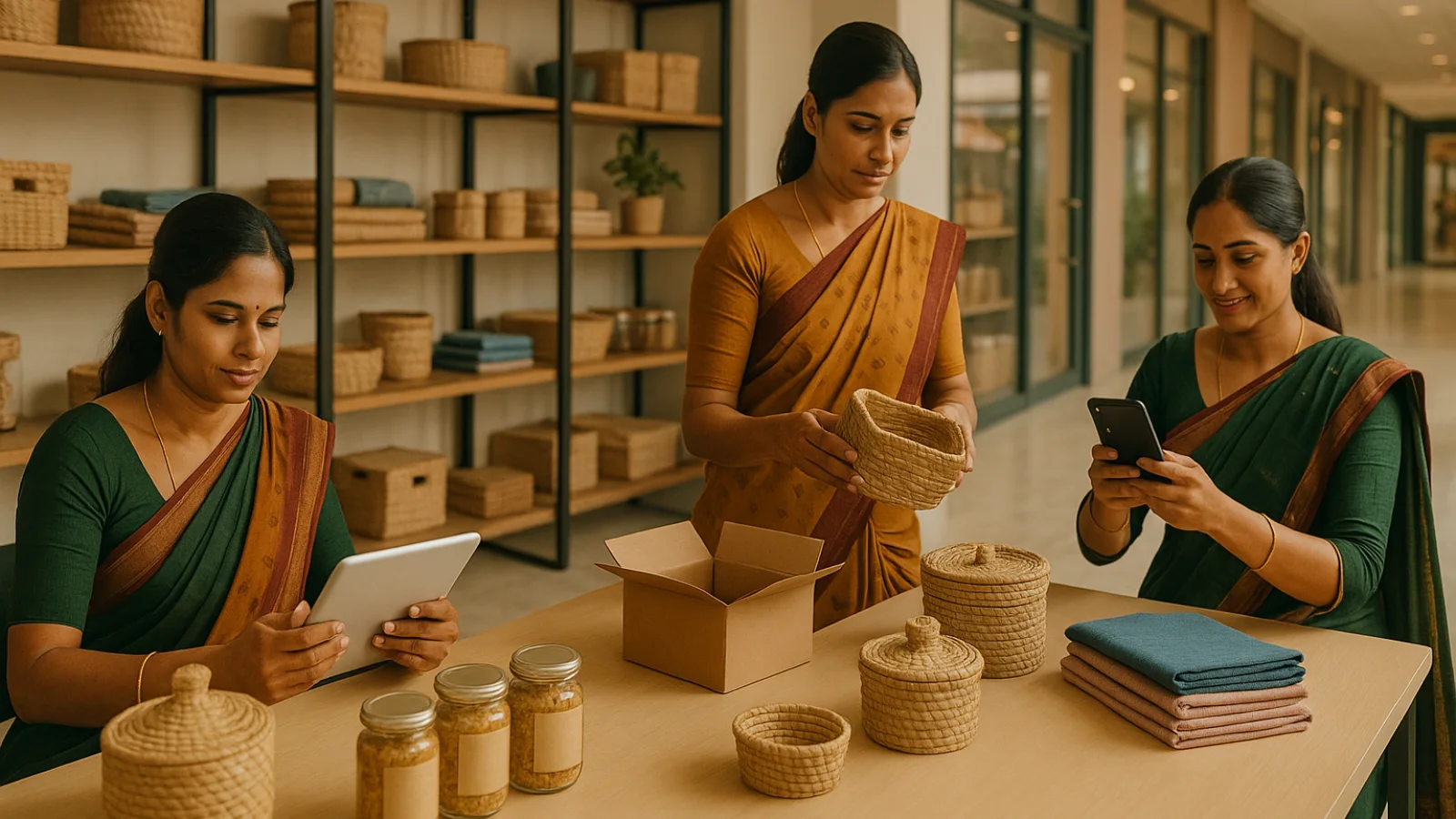
For a small group, one member may own the product record, another quality checks finished goods, another packs orders, and one authorised user handles the seller account and bank reconciliation. Shared passwords and unrecorded stock movements create avoidable risk. The digital storefront only works when the physical workflow is repeatable.
Build one product master before taking photographs
Create a single sheet for every proposed item. Record the internal product code, product name, material or ingredients, size or net quantity, colour or variant, production time, available stock, shelf life where relevant, storage requirement, selling price, package weight and responsible group member. Food, wellness or regulated categories should not be listed until the required licence, label and product rules have been checked.
This master prevents three common errors: a photograph showing one variant while the description promises another; a selling price that ignores packaging and dispatch cost; and an online order for stock that was already sold locally. Start with five to ten dependable products rather than uploading a large catalogue that the group cannot fulfil consistently.
A practical catalogue checklist
- Product identity: Use one clear, accurate name without exaggerated health, quality or origin claims.
- Photographs: Capture the full item, useful detail, scale and package condition in clean light against a simple background.
- Description: State material, ingredients, dimensions, quantity, care or storage guidance and what the buyer receives.
- Variant control: Give each size, colour, flavour or pack quantity a separate stock record where the system requires it.
- Price control: Include production input, labour, inner packing, outer packing, applicable tax, platform terms and an allowance for returns or damage.
- Availability: Publish only quantities the group can produce, quality check and dispatch within the promised time.
- Compliance: Keep licences, invoices and product labels current for regulated categories; do not copy claims from another seller.
Packaging is part of the product promise
A buyer sees the catalogue first but judges the seller again when the parcel arrives. Test packaging for handling, moisture, dust, crushing and leakage as relevant to the item. Use an inner layer that protects the product and an outer package suited to dispatch. Record the final packed weight and dimensions because they affect fulfilment decisions.
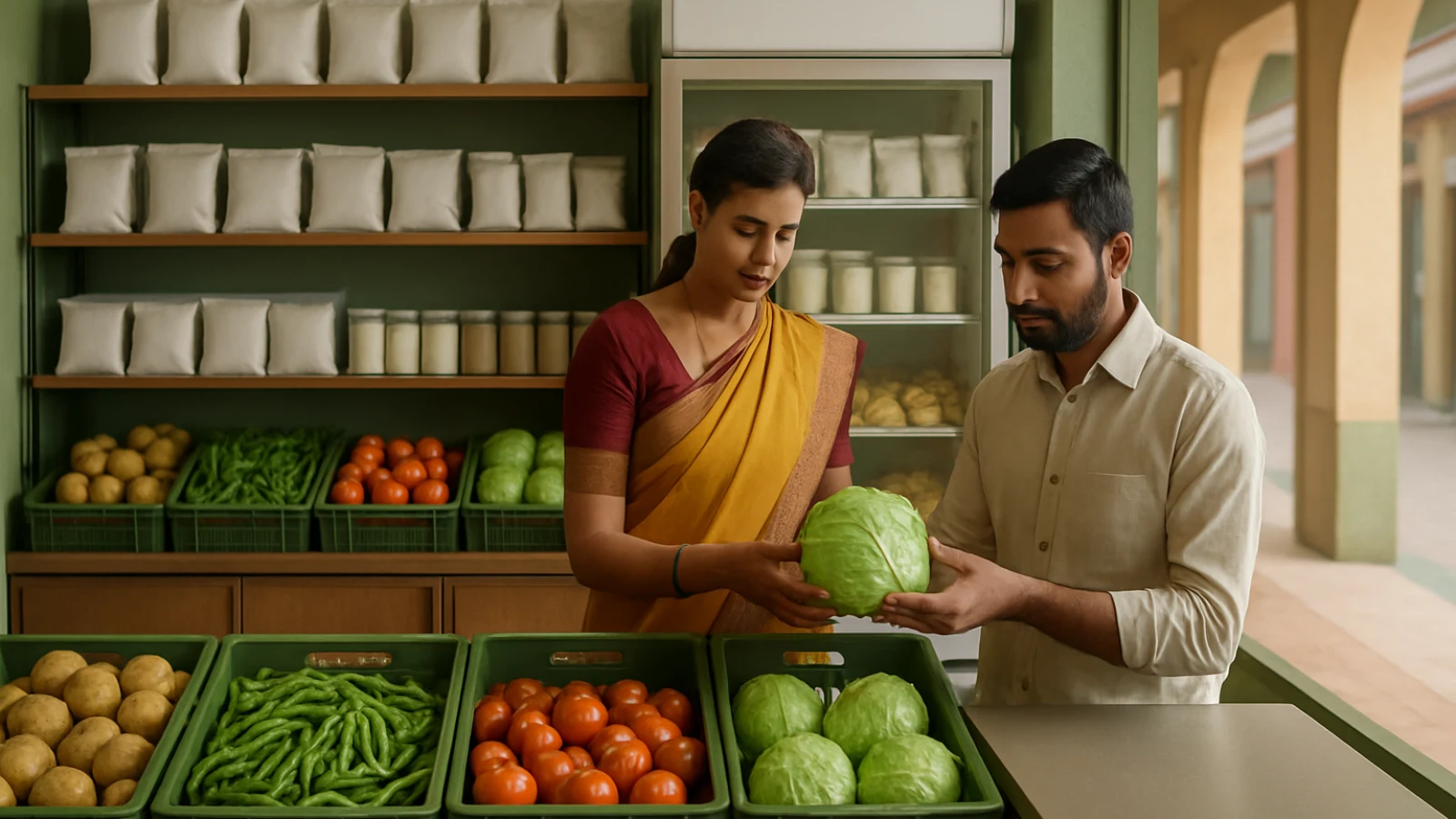
For foods, do not rely on a decorative label alone. Verify the applicable licence, mandatory declarations, net quantity, dates, storage directions and other requirements for the actual product. For fragile craft, textiles and home products, include handling or care guidance where it is useful. Never place a readable customer address in a public catalogue photograph.
How a Tarapur commercial workspace can support online selling
A physical shop and an online channel solve different parts of the business. The shop can support local discovery, sampling, collection, stock storage and customer trust. The digital channel can widen reach. An organised unit may include a small photo surface near natural light, labelled stock shelves, a clean packing table, a secure document cabinet and one billing or seller-account desk.
During a Balram Complex site visit, a group should measure the usable storage rather than judging only the frontage. Ask where inward material will be checked, where finished goods will wait, how food and non-food products will be separated, and whether packing can occur without blocking walk-in customers. Balram Complex is not presented as an eSaras partner or enrolment centre; it is simply one local commercial-space option to evaluate for the group’s own workflow.
A 30-day low-risk pilot
- Week 1: Confirm seller eligibility, authorised users, bank details, product licences and the official registration path.
- Week 2: Select five dependable products, complete the product master, calculate the full packed cost and test two packaging methods.
- Week 3: Produce consistent photographs and descriptions, check stock codes, and rehearse order-to-dispatch responsibilities.
- Week 4: Complete onboarding using the official portal, publish only verified stock, and review every order, return, payment and customer question.
The pilot should measure order accuracy, packing time, damage, cancellation, customer questions, net proceeds and the time taken to reconcile payment. These measures reveal whether the group needs better training, packaging or stock discipline before expanding the catalogue.
Frequently asked questions
Can any Tarapur shop register on eSaras?
No. The official seller paths are tied to listed rural-livelihood entity types such as SHG or individual SHG, CLF, FPO and Producer Enterprise. Confirm current eligibility on the official portal.
What documents should be prepared first?
The registration page lists the applicable group or entity identification, GST information, PAN and bank account details. It also specifies accepted file types and a 1 MB per-document limit.
Do attractive photographs alone create online sales?
No. Photographs help discovery, but accurate descriptions, correct stock, viable pricing, safe packaging, timely dispatch and payment reconciliation determine whether the operation can continue.
Can food products be listed without checking licences?
No. The seller-help page notes that natural and organic food categories require applicable licences. The group should verify all current food, label and tax requirements for its product before listing.
Should every product be uploaded at once?
A small reliable pilot is safer. Begin with products that have consistent quality, known cost, stable stock and tested packaging, then expand using actual order and return data.
Action plan for Tarapur groups
Confirm eligibility through the official eSaras route, speak with the relevant JEEViKA or group institution, build the product master, verify regulated-product requirements and run a small packing test. Keep marketplace registration, shop leasing and inventory investment as separate decisions. A digital opportunity is useful only when the group can fulfil its promise after an order arrives.
Need an organised local workspace for catalogue preparation, stock and packing? Compare available Balram Complex shops and use the Book Site Visit popup to inspect storage, worktable space, customer flow and connectivity before choosing a unit.
Official sources
- Digital India update: eSaras strengthens rural livelihoods through digital commerce, July 11, 2026
- Official eSaras seller marketplace: registration document requirements
- Official eSaras seller help: catalogue, fulfilment and payment workflow
- Bihar JEEViKA: official Munger district programme page
- Munger district administration: official Tarapur office listing