
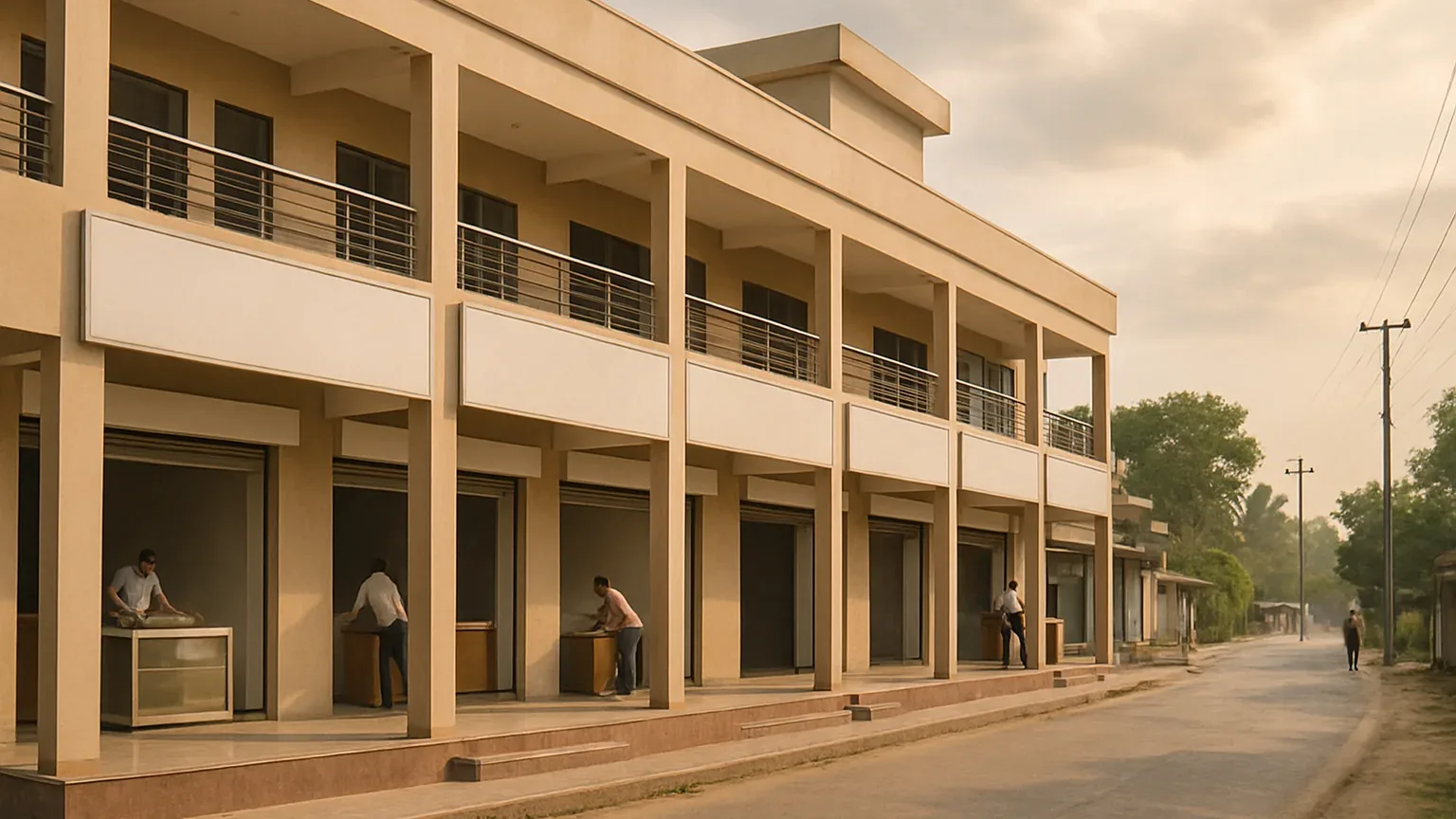
Topic for July 4, 2026: The strongest local planning signal today is not a single retail trend, but a set of official Munger district infrastructure notices around Tarapur and nearby movement corridors. For shop seekers at Balram Complex, the practical question is simple: how should a commercial tenant prepare when local court, bypass, and tourism-linked projects begin shaping future visitor movement?
What the official notices show
Munger district's official notification archive, last updated in June 2026, lists several projects that matter for the wider Tarapur market. These include land acquisition for cultural tourism development around Teldiha Temple, a Tarapur Sub-Divisional Civil Court building and housing project for judicial officers, and a Tarapur bypass route from Vanshipur to Bihma via Dhobai, Gogachak, Teldiha Temple, and Mohanganj. These notices are not a guarantee of immediate footfall at any one shop, but they are useful location signals for anyone comparing commercial space.
Why civic infrastructure can change shop demand
When a town adds or improves administrative, transport, and visitor-linked facilities, small businesses usually feel the impact first through everyday services. More people travelling for documents, hearings, office work, appointments, temple visits, construction activity, or route changes can increase demand for quick, reliable, visible shops. A shop does not need to be large to benefit; it needs to be easy to find and useful for repeat local needs.
Court-linked demand: services over decoration
The Munger District Court website shows the district court ecosystem around case status, court orders, cause lists, forms, and eCourt services. For a local commercial market, court-linked movement can create demand for photocopying, printing, documentation support, stationery, legal-format typing, scanning, online form assistance, tea and snacks, mobile recharge, courier support, and two-wheeler convenience services. These are practical categories for a shop that wants steady utility-based footfall.
Bypass and temple-route demand: visibility matters
A bypass or route improvement changes how people approach a market. Even before final traffic patterns settle, shop seekers should think about frontage, approach road visibility, two-wheeler stopping space, delivery movement, and easy identification. The Teldiha-area tourism notice is also relevant because visitor-linked demand often supports packaged water, snacks, puja-related items, travel essentials, small food counters, mobile accessories, and quick-service retail.
What Balram Complex shop seekers should inspect
- Approach visibility: can a new customer identify the shop quickly from the road or walkway?
- Service counter layout: is there enough room for a counter, customer queue, printer, laptop, weighing scale, or product display?
- Daily utility fit: can the shop serve people who need fast transactions rather than long browsing?
- Signage discipline: is the sign area clean, simple, and readable from customer movement paths?
- Delivery and two-wheeler access: can customers stop briefly without blocking the entrance?
- Digital readiness: keep QR payment, WhatsApp enquiry, billing, and service records ready from day one.
Best-fit shop categories for this infrastructure signal
The strongest categories are those that solve daily movement problems: documentation and print services, stationery, mobile accessories, snacks and tea, packaged food, pharmacy and first-aid, small electronics, courier and parcel support, tailoring, travel essentials, agri and household supplies, and assisted digital services. These categories can work well when they are visible, quick, and trusted.
Do not over-read the signal
Infrastructure notices should not be treated as a promise of instant demand. They are planning inputs. A serious tenant should still inspect the exact unit, estimate monthly rent and working capital, compare shop size, test the category, and track real enquiries after opening. The advantage of Balram Complex is that a tenant can start with a practical shopfront and adapt the offer as local movement changes.
Balram Complex takeaway
Tarapur's court, bypass, and tourism-linked notices point to a future where local movement may become more service-oriented. Shop seekers who plan for quick customer utility, simple visibility, and disciplined operations will be better positioned than tenants who choose only by rent or decoration.
CTA: Planning a shop at Balram Complex for documentation, service retail, food, daily needs, or visitor-linked demand? Book a site visit and compare frontage, counter layout, access, and storage before finalizing your unit.